
IMF Blog: New Blog: COVID-19 Crisis Poses Threat to Financial Stability Dienstag, 14. April 2020 - 17:39
| |
 (photo: Raxpixel/iStock by Getty Images) | |
Dear Colleague, We just published a new blog. Please find the full text below, watch the live press briefing, and listen to the new podcast for more details. Blog translations will soon be available in عربي, 中文, 日本語, Español, Français, Português and Русский. COVID-19 CRISIS POSES THREAT TO FINANCIAL STABILITY By Tobias Adrian and Fabio Natalucci The COVID-19 pandemic has caused an unprecedented human and health crisis. The measures necessary to contain the virus have triggered an economic downturn. At this point, there is great uncertainty about its severity and length. The latest Global Financial Stability Report shows that the financial system has already felt a dramatic impact, and a further intensification of the crisis could affect global financial stability. Since the pandemic's outbreak, prices of risk assets have fallen sharply: At the worst point of the recent selloff, risk assets suffered half or more of the declines they experienced in 2008 and 2009. For example, many equity markets—in economies large and small—have endured declines of 30 percent or more at the trough. Credit spreads have jumped, especially for lower-rated firms. Signs of stress have also emerged in major short-term funding markets, including the global market for U.S. dollars. Market strain Volatility has spiked, in some cases to levels last seen during the global financial crisis, amid the uncertainty about the economic impact of the pandemic. With the spike in volatility, market liquidity has deteriorated significantly, including in markets traditionally seen as deep, like the U.S. Treasury market, contributing to abrupt asset price moves. 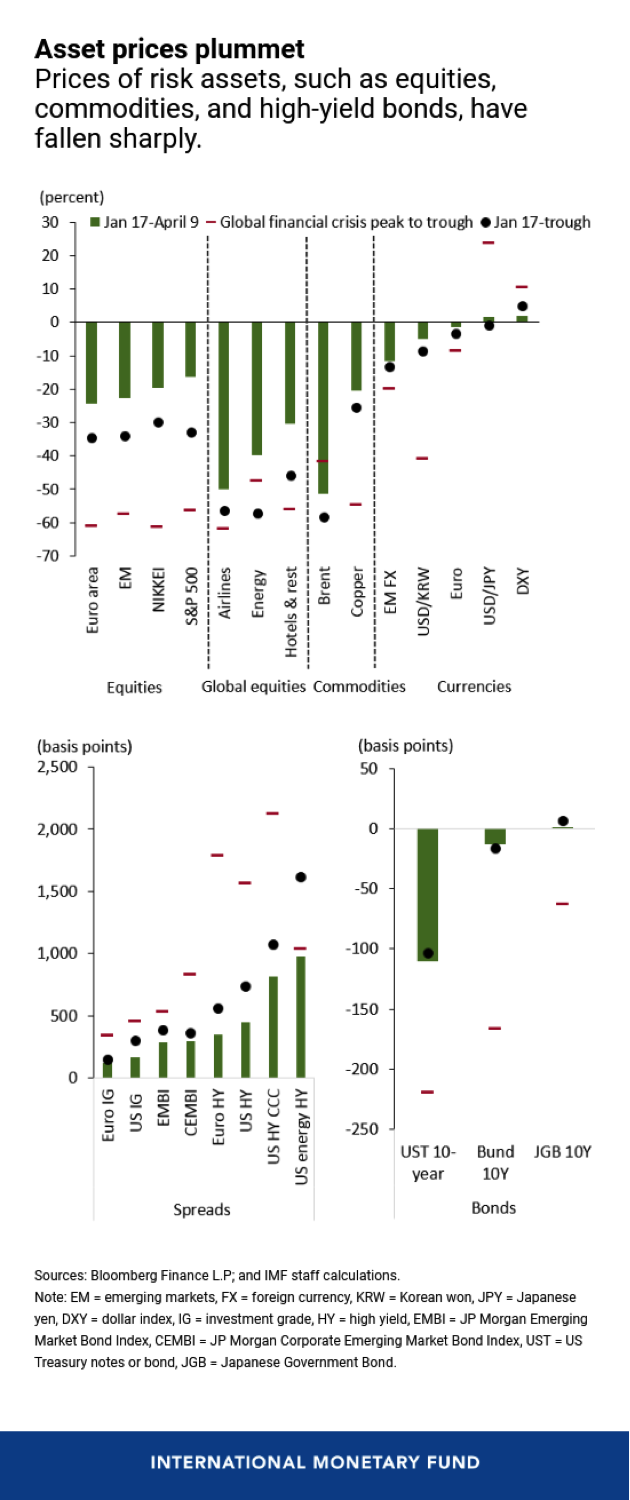
Second, central banks have provided additional liquidity to the financial system, including through open market operations. Third, a number of central banks have agreed to enhance the provision of U.S. dollar liquidity through swap line arrangements. And finally, central banks have reactivated programs used during the global financial crisis as well as launched a range of new broad-based programs, including to purchase riskier assets such as corporate bonds. By effectively stepping in as "buyers of last resort" in these markets and helping contain upward pressures on the cost of credit, central banks are ensuring that households and firms continue to have access to credit at an affordable price. To date, central banks have announced plans to expand their provision of liquidity — including through loans and asset purchases—by at least $6 trillion and have indicated a readiness to do more if conditions warrant. As a result of these actions aimed at containing the fallout from the pandemic, investor sentiment has stabilized in recent weeks. Strains in some markets have abated somewhat and risk asset prices have recovered a portion of their earlier declines. Sentiment continues to be fragile, however, and global financial conditions remain much tighter compared to the beginning of the year. 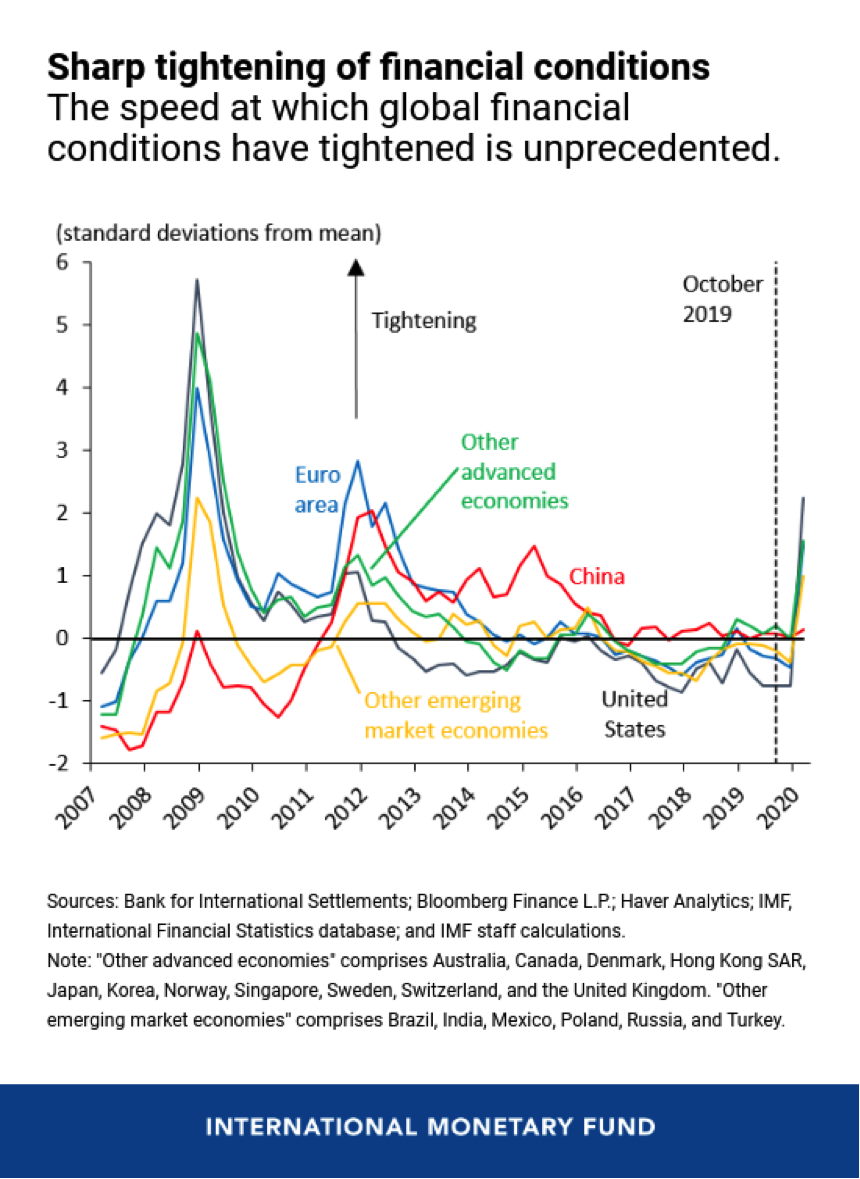

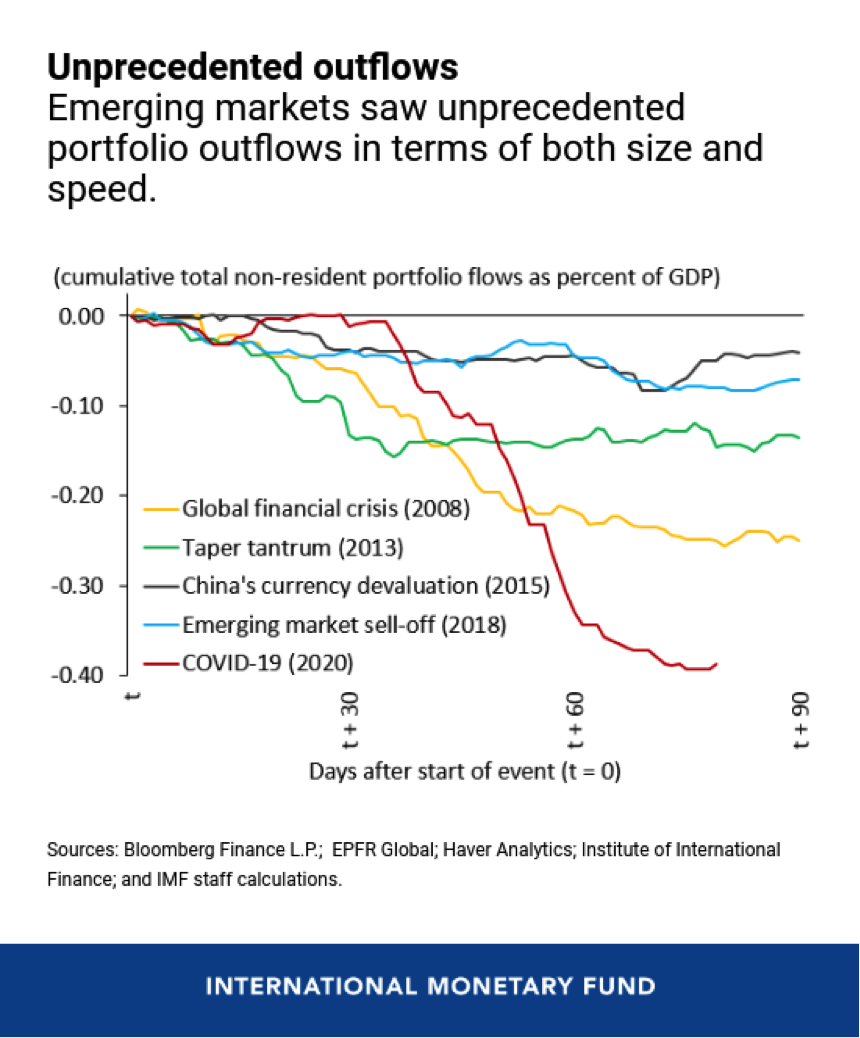
As firms become distressed and default rates climb higher, credit markets may come to a sudden stop, especially in risky segments like high yield, leveraged loan, and private debt markets. These markets have expanded rapidly since the global financial crisis, reaching $9 trillion globally, while borrowers' credit quality, underwriting standards, and investor protections have weakened. Since early March, high-yield spreads have skyrocketed notwithstanding recent declines, particularly in the sectors most affected by the pandemic like air travel and energy. Similarly, leveraged loan prices have fallen sharply—about half the drop seen during the global financial crisis at one point. As a result, ratings agencies have revised upward their speculative- grade default forecasts to recessionary levels, and market-implied defaults have also risen sharply. 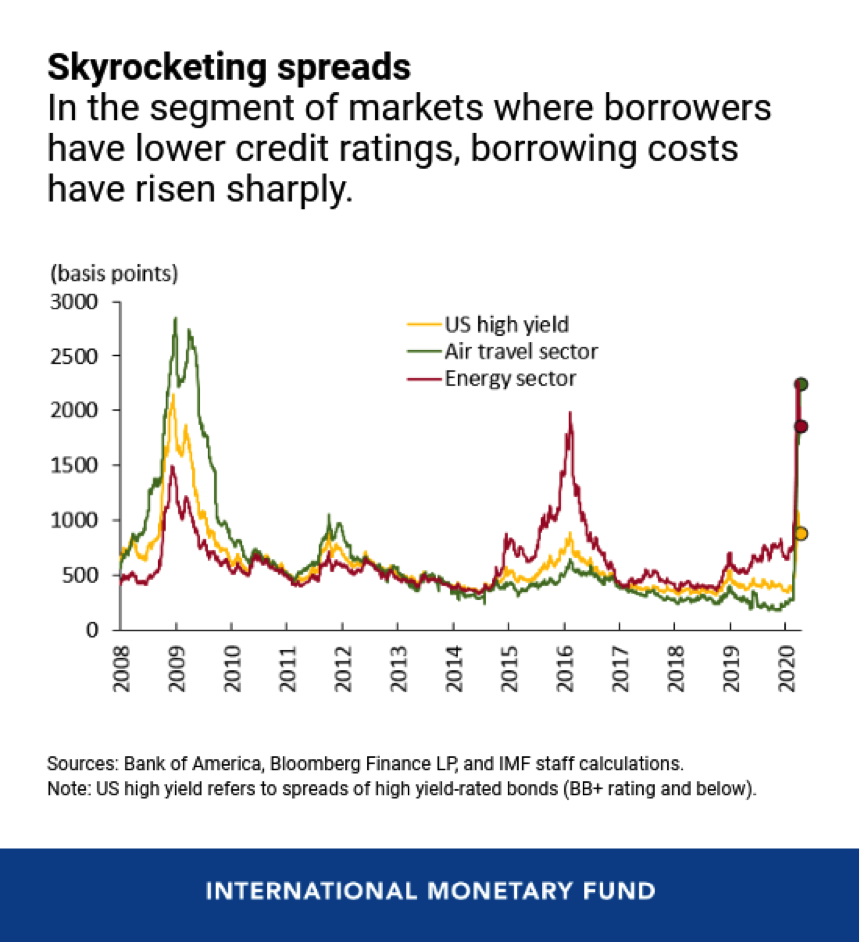
Nonetheless, the resilience of banks may be tested in the face of a sharp slowdown in economic activity that may turn out to be more severe and lengthy than currently anticipated. Indeed, the large declines in bank equity prices since mid-January suggest that investors are concerned about profitability and prospects for the banking sector. For example, measures of bank capitalization based on market prices are now worse than during the 2008 global financial crisis in many countries. The concern is that banks and other financial intermediaries may act as an amplifier should the crisis deepen further. 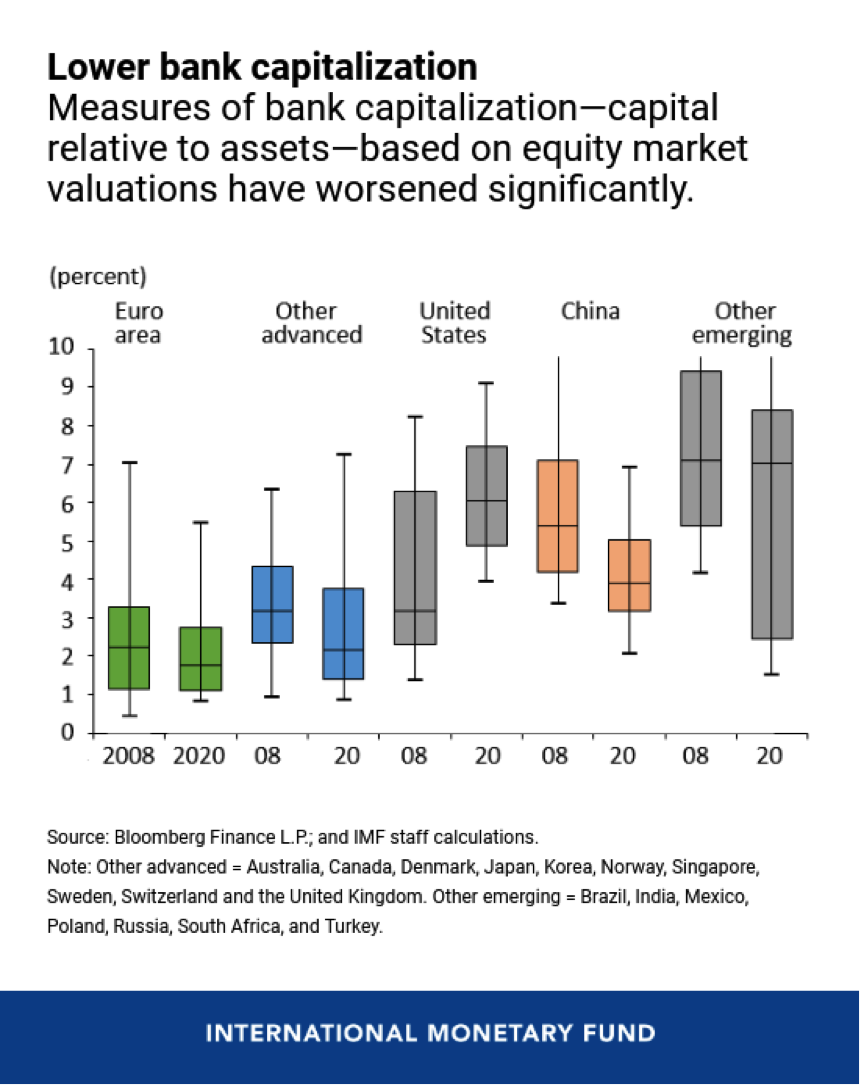 |