
Partners Group: The Golden Age of Private Credit Selection Dienstag, 05. Mai 2026 - 10:28


- Private credit is entering a new normal of greater bifurcation and return dispersion, driven by AI disruption, economic transformation, and selective refinancing pressure.
- While certain risks warrant attention, current fundamentals – for now – across private credit remain broadly resilient, and current headlines often overstate near-term systemic stress.
- Longer term, however, the scale of the AI transformation and its market impact may be underappreciated.
- Traditional levered beta strategies will become less effective, as returns are increasingly shaped by underwriting quality and downside outcomes in the era of AI disruption.
- This environment favors active credit selection, where manager experience, discipline, and the ability to distinguish resilient from vulnerable borrowers will drive alpha and long-term returns.

Private credit has not been short of headlines in recent months. Concerns around redemptions, valuations, and software exposure due to AI disruption have driven a sharp shift in sentiment, at times framing the asset class as facing systemic stress. While these issues warrant attention, they often overstate the near-term implications and underappreciate the underlying resilience in both current fundamentals and the macro backdrop.
However, the more important story, in our view, is one of transition. Over the mid- to long-term, AI will drive greater dispersion across borrowers, increasing the divide between winners and losers. In this environment, defaults are likely to rise – not due to macro stress, but because of structural disruption at the company level.
For much of the past decade, the dominant strategy was straightforward: build a diversified portfolio, apply leverage, and collect spread. That approach worked well in a benign default environment – but it will be harder to replicate going forward.
In our view, private credit is now entering a new normal defined by greater bifurcation and wider dispersion of returns. This is as much an opportunity as it is a challenge. In a more differentiated market, selectivity becomes the primary driver of returns. It is against this backdrop that we assess the current private credit fundamentals, separate headlines from reality, and offer a path forward for earning returns in private credit.
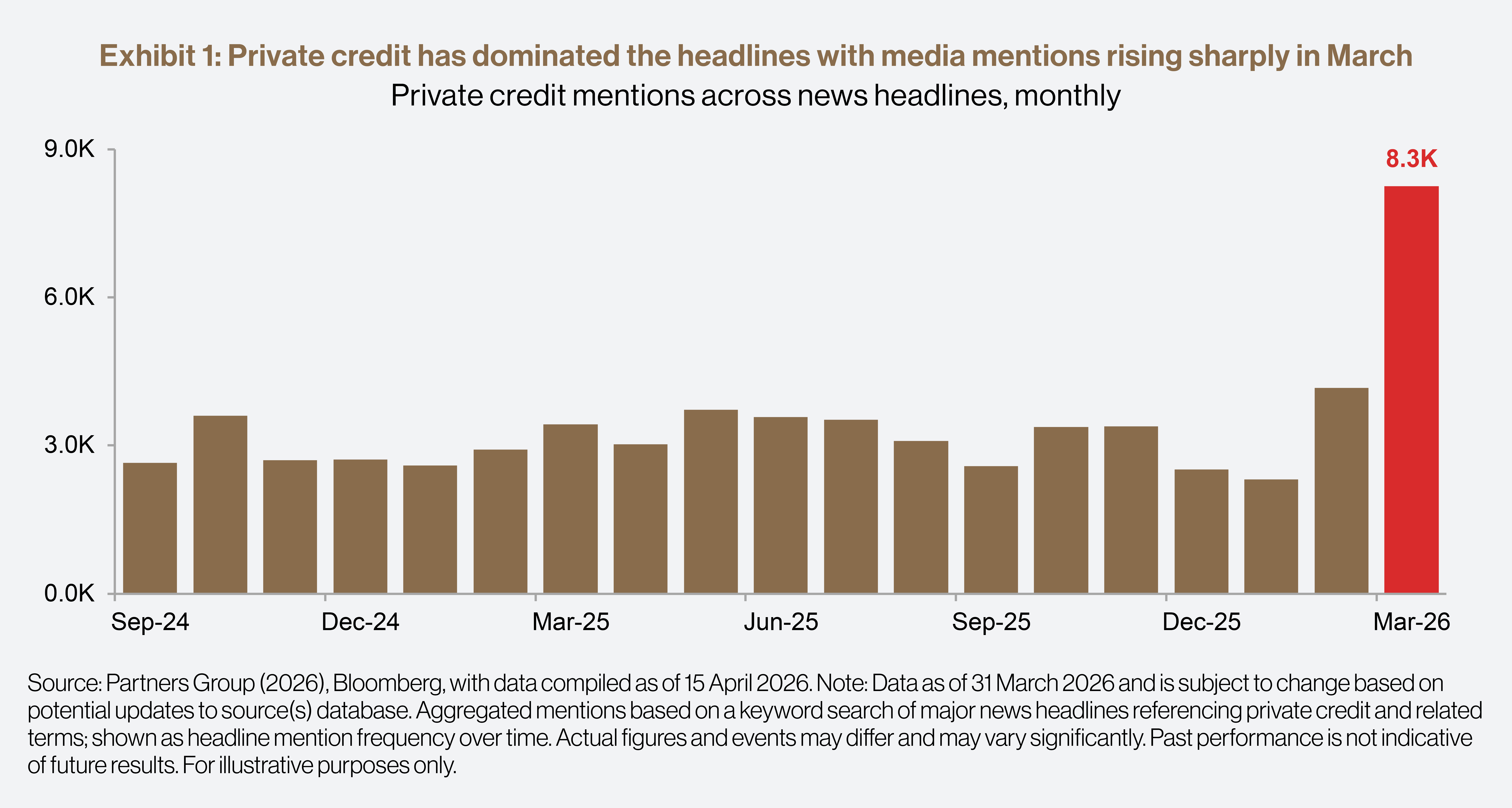
Headlines may drive sentiment, but fundamentals drive outcomes. At an aggregate level, current fundamentals remain resilient:
- Earnings and revenue growth: Borrower-level growth has moderated from post-pandemic highs but remains positive. A more stable‑to‑lower rate backdrop – particularly in the U.S. – should support broader economic activity, and a potential re‑acceleration in earnings growth.
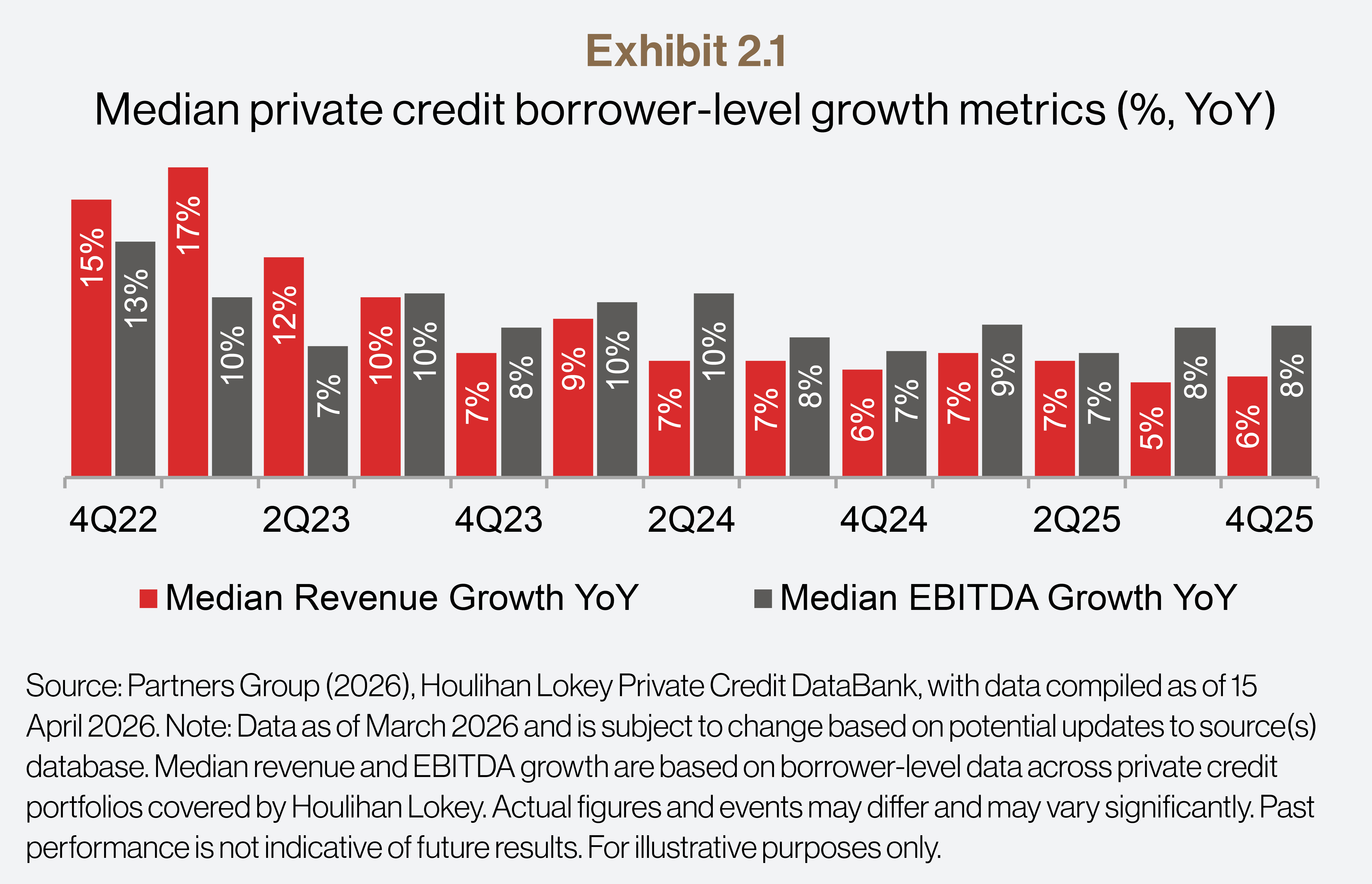
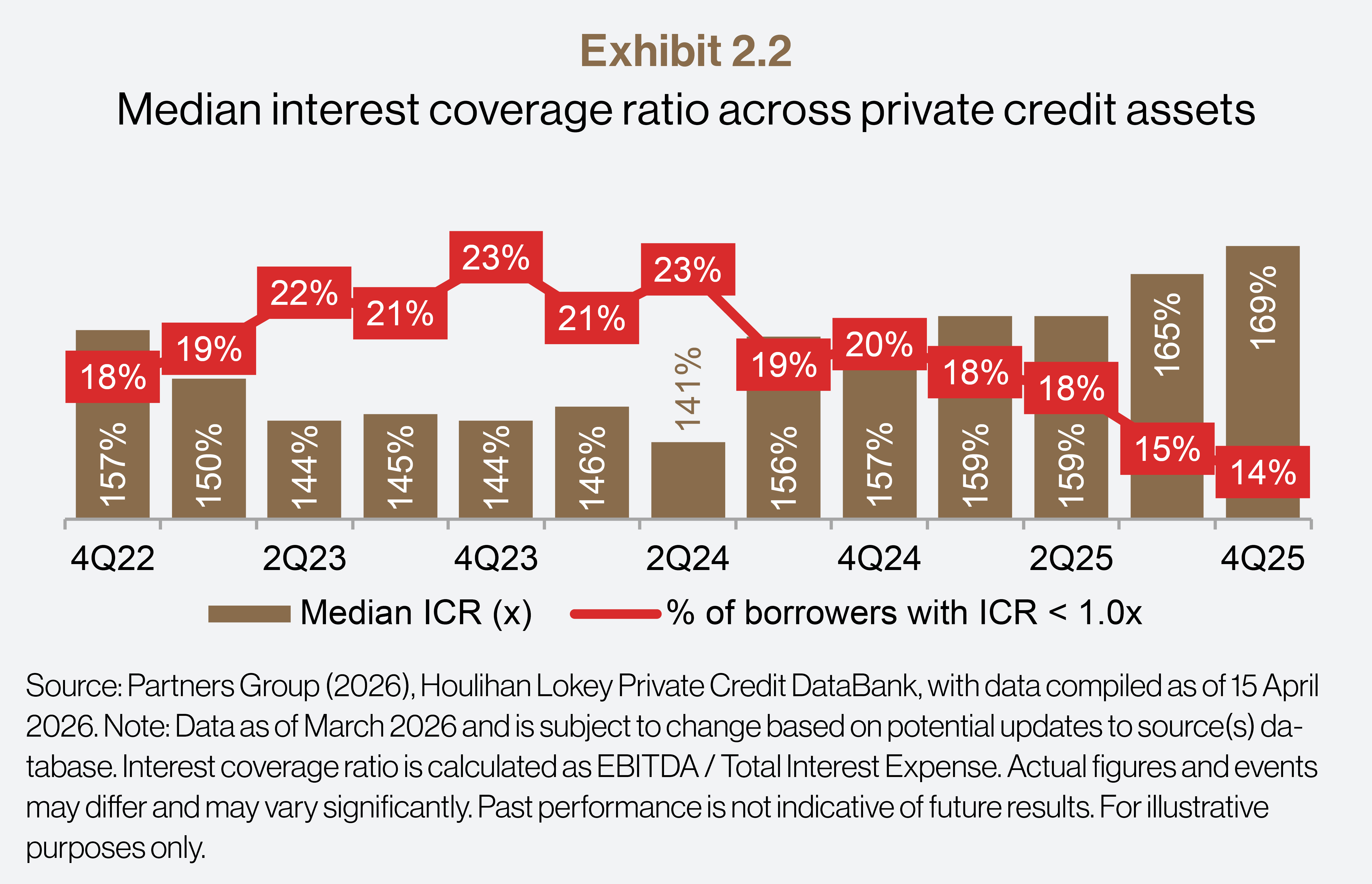
- Coverage ratios: Interest coverage ratios have improved from mid-2024 lows, supported by lower policy rates and healthy EBITDA growth. The share of riskier borrowers (sub 1.0x coverage) has declined materially, falling to 14% in Q4 2025 from 21-23% throughout 2023 and early 2024.1
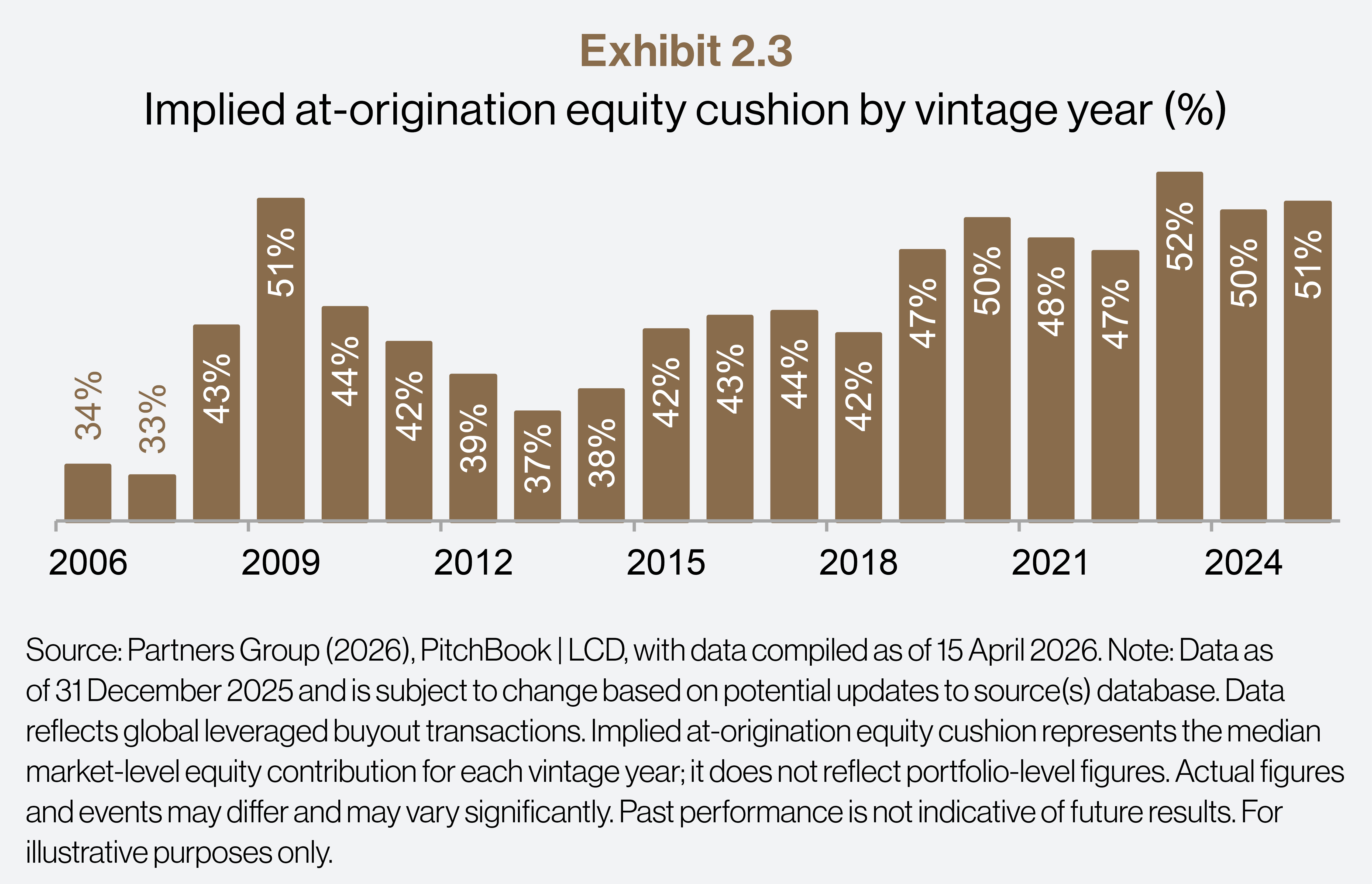
- Equity cushions: Equity cushions remain a meaningful buffer. Average equity contributions at origination have increased steadily over the past decade, offering lenders greater protection should fundamentals weaken. Since 2013, the average LBO equity contribution at-origination has moved up from c. 35% to 50% today.2
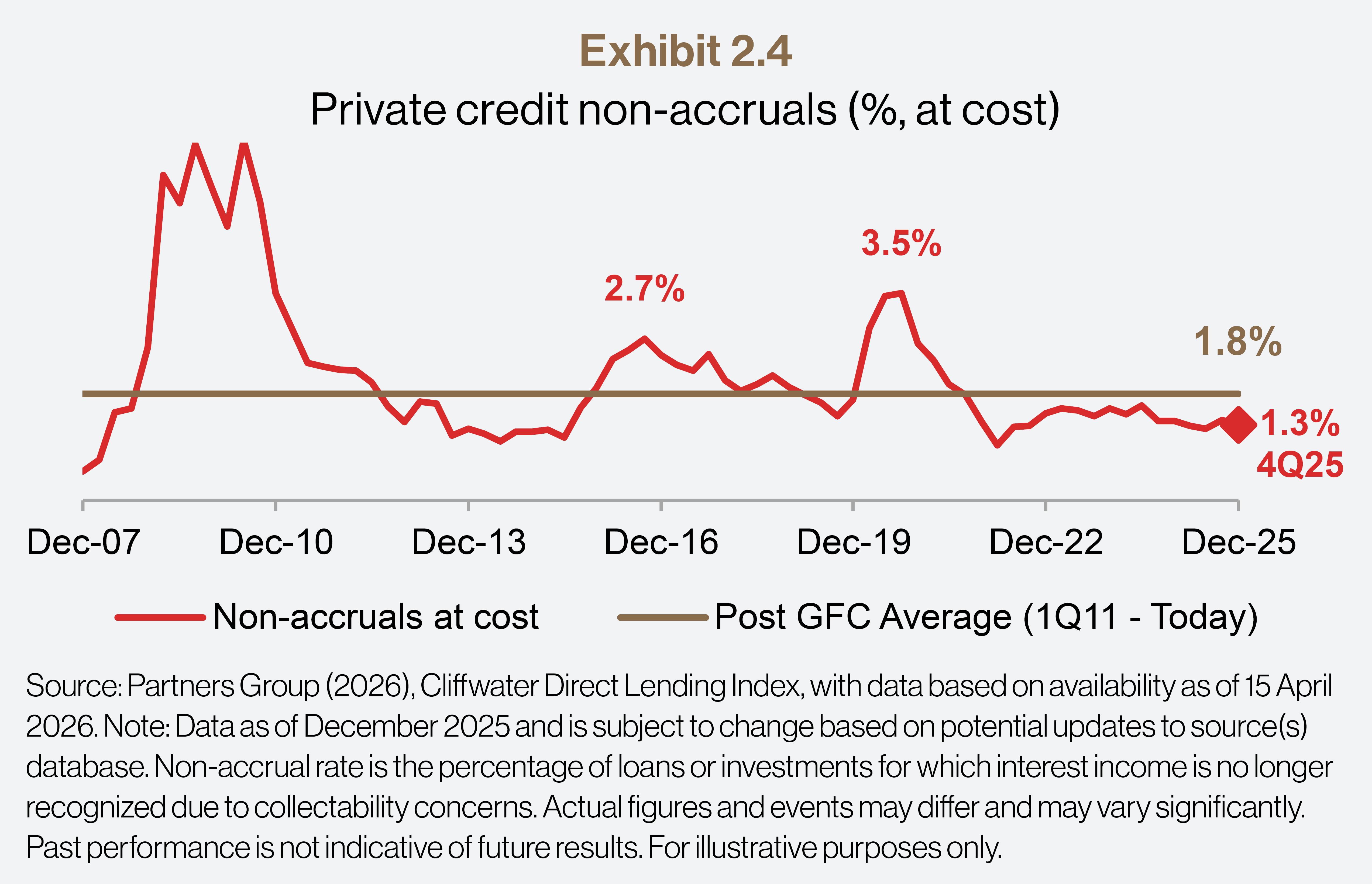
- Non-accruals: Non-accrual rates remain below the post-GFC average, declining to around 1.3% of cost in Q4 20253. Encouragingly, non-accruals in junior debt have fallen to the lowest level since Q1 20244. While software loans pushed up the distressed rate in Q1 2026, we don't think this will translate into elevated defaults or credit deterioration in private credit portfolios.
At a macro level, the backdrop remains supportive: growth is moderating but not deteriorating, recession risks remain contained, and while rates have repriced higher on the back of geopolitical volatility, they remain broadly stable. It is against this solid backdrop that we turn to the key investor concerns shaping today’s debate.
The AI ecosystem has made significant advancements in recent quarters, calling into question the durability of software business models. Software represents roughly 20% of the total U.S. direct lending market5, or closer to 30-35% when including adjacent industries6. Exposure varies significantly by region, structure, and product type, with European direct lenders generally maintaining lower – though still meaningful – exposure of around 10-15%7.
The concern is real. AI product releases are accelerating, capabilities are compounding, and workflows historically handled by standalone SaaS applications are increasingly being automated. Many software loans over the past decade were underwritten on annual recurring revenue (ARR) multiples against seat-based B2B SaaS businesses with sticky revenues – but often limited profitability. If AI efficiencies reduce the number of seats a company needs, the unit economics break down – and with that, revenue durability and terminal value assumptions underpinning these loans come under pressure.
Therefore, some generic, seat-based SaaS businesses will struggle, defaults will likely rise, and there will be winners and losers. But the conclusions drawn are too simplistic in our view for three key reasons:
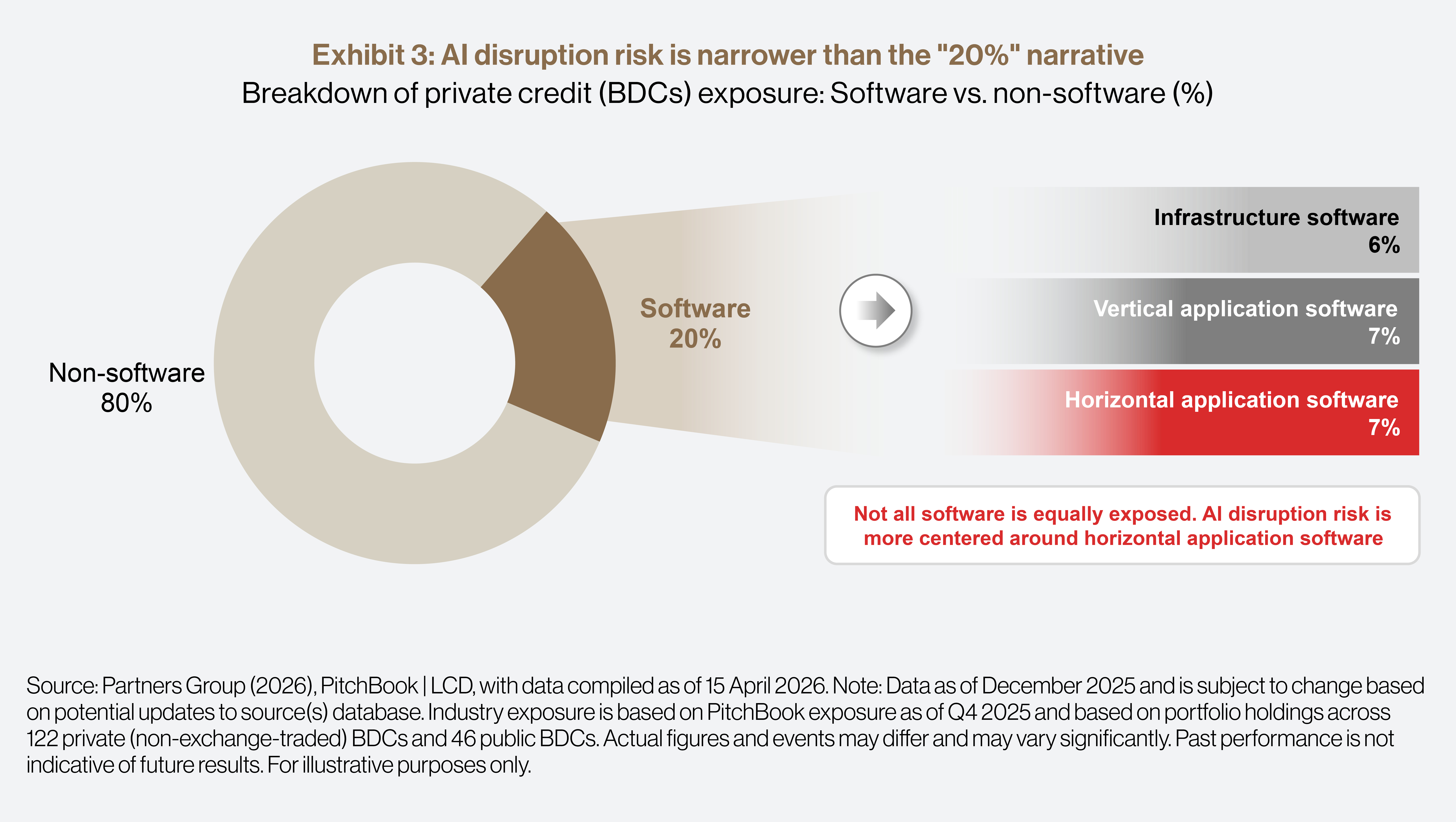
I. Not all software is equally exposed. Incumbents with strong moats, proprietary data, AI-enabled workflows, and exposure to regulated or mission-critical end markets – where accuracy, compliance, and complexity matter – are better positioned to sustain value and drive efficiency gains. These are lower risk businesses and typically found in infrastructure and vertical application software. By contrast, more vulnerable software tends to be rules-based, repetitive, and often tied to functions like customer service or project management. This exposure largely sits within horizontal application software, which accounts for around 35% of total software exposure within the U.S. direct lending market8. This implies a more modest at-risk exposure of just 7% – well below the 20% headline figure9.
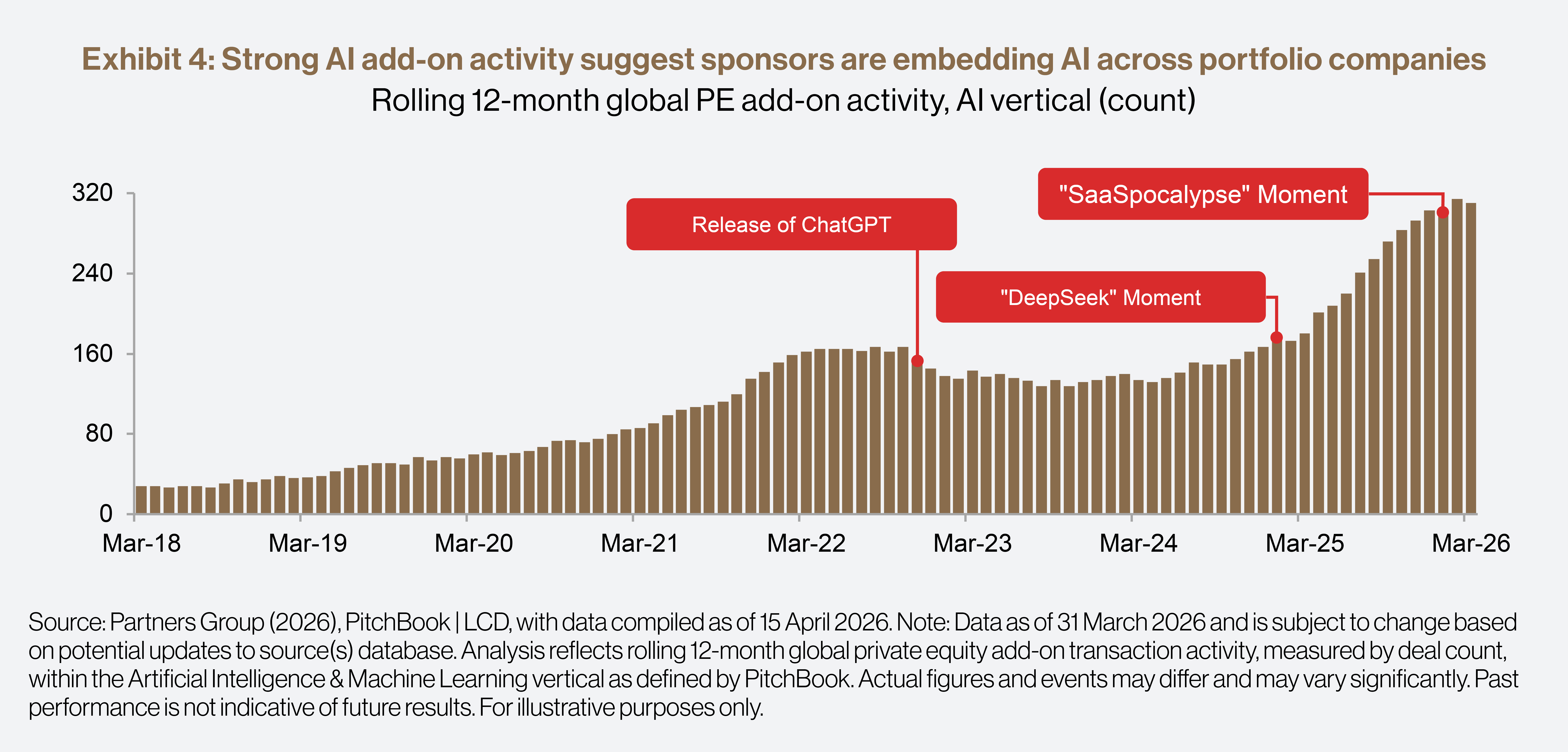
II. Private equity sponsors are actively adapting to the AI transition by embedding AI across their portfolio companies to drive efficiencies, enhance growth and adapt business models. AI-focused add-on activity is running near record highs10 signaling that sponsors are leaning into AI – not stepping back. Private credit managers are also aligned with these sponsors, many of whom have navigated prior disruption cycles and have both the operational playbooks and the vested interest to drive this transition.
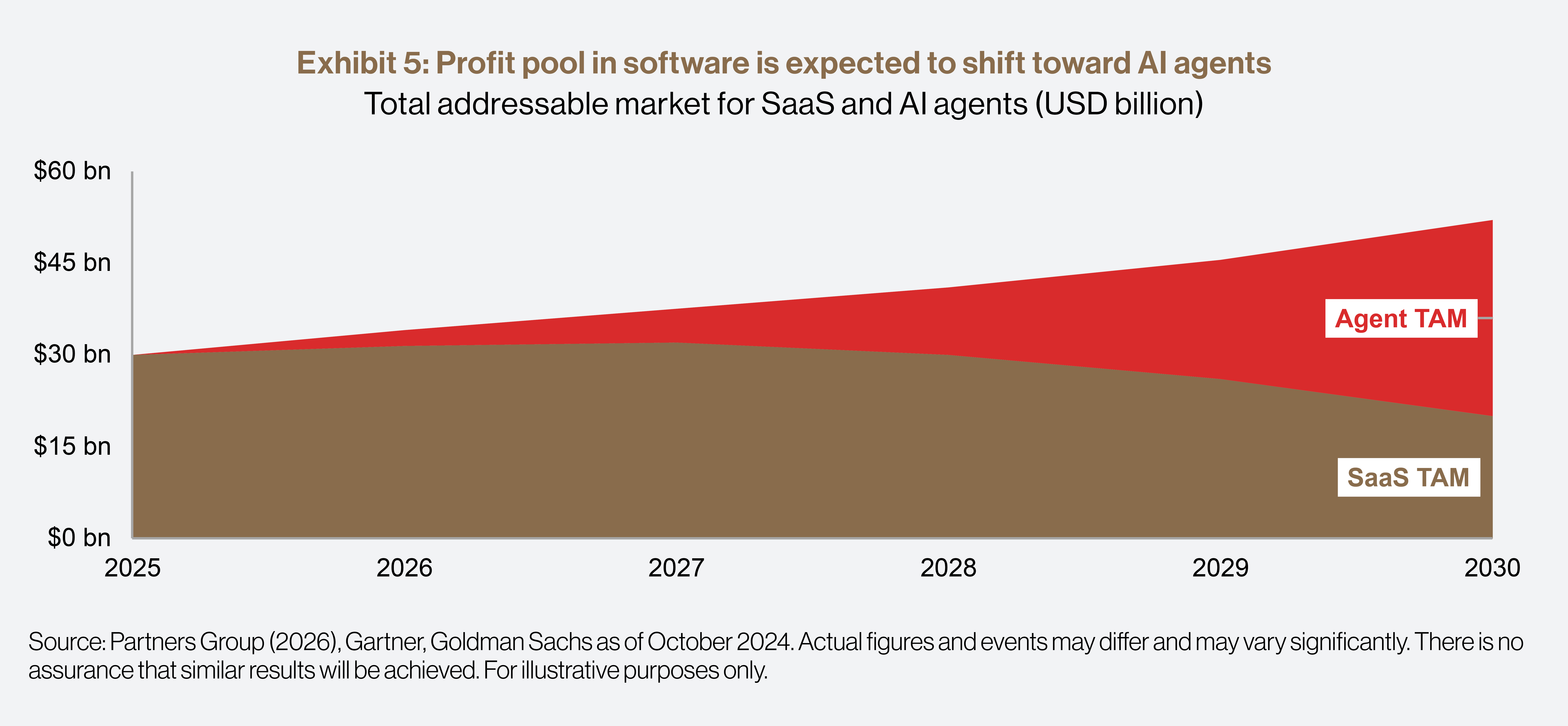
III. AI can be a friend, not always a foe to software. In practice, AI is being embedded into existing software ecosystems rather than displacing them. As both Anthropic and Nvidia’s Jensen Huang have noted, AI is often augmenting software, not replacing it – which can effectively increase its addressable market rather than compressing it outright11.
This is not to say that disruption isn’t happening. AI‑driven change is real and will create winners and losers, pushing private credit toward greater bifurcation and dispersion. But a meaningful share of software exposure remains more resilient than headlines suggest for the three reasons outlined above.
2. Refinancing: A Timing and Selectivity Issue
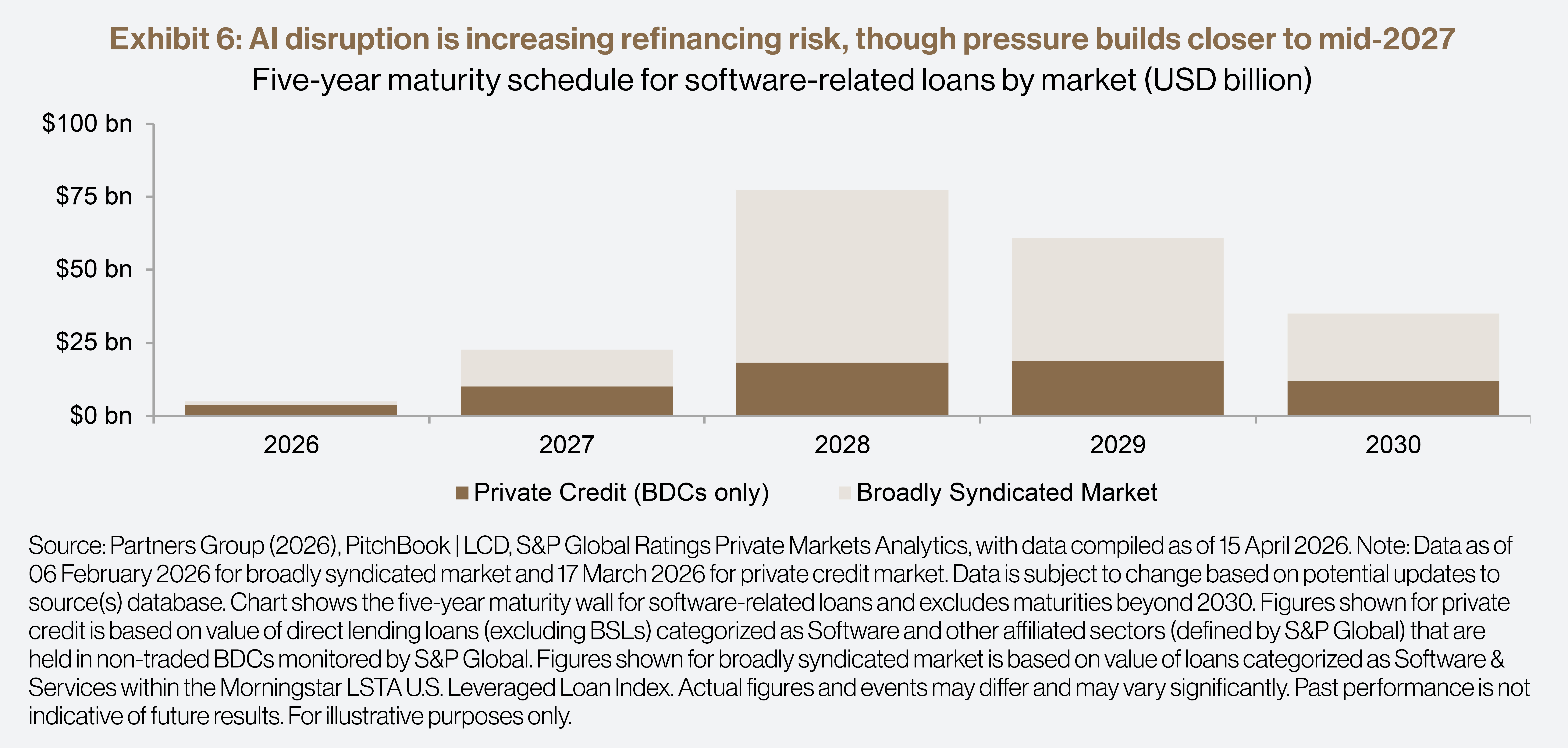
Software concerns have also spilled over into worries around an impending maturity wall and refinancing abilities. Nearly 50% of software loans maturing through 2030 (or c. 35% of all software loans outstanding) come due by 2028 – USD 30 billion12 in directly originated loans and USD 75 billion13 in leveraged loans. This makes refinancing an area to watch, but timing matters here.
Refinancing discussions typically begin 12-18 months ahead of maturity, with execution no later than six months prior. With most maturities concentrated in mid-to-late 2028, the bulk of refinancing pressure is pushed into mid-2027, providing a meaningful buffer. This window allows sponsors time to adapt portfolio companies' operating models – including AI-driven improvements – while giving lenders flexibility to structure solutions that protect downside risks.
Refinancing will not be frictionless, though. Lenders are already underwriting more conservatively – shifting in some cases from ARR‑ to EBITDA‑based frameworks for software – and demanding wider spreads to compensate for uncertainty. Despite limited transactions activity in recent months, new-issue direct lending spreads are already around 100bps wider, and up to 150bps wider for software, although this is also attributable to broader shifts in credit markets14.
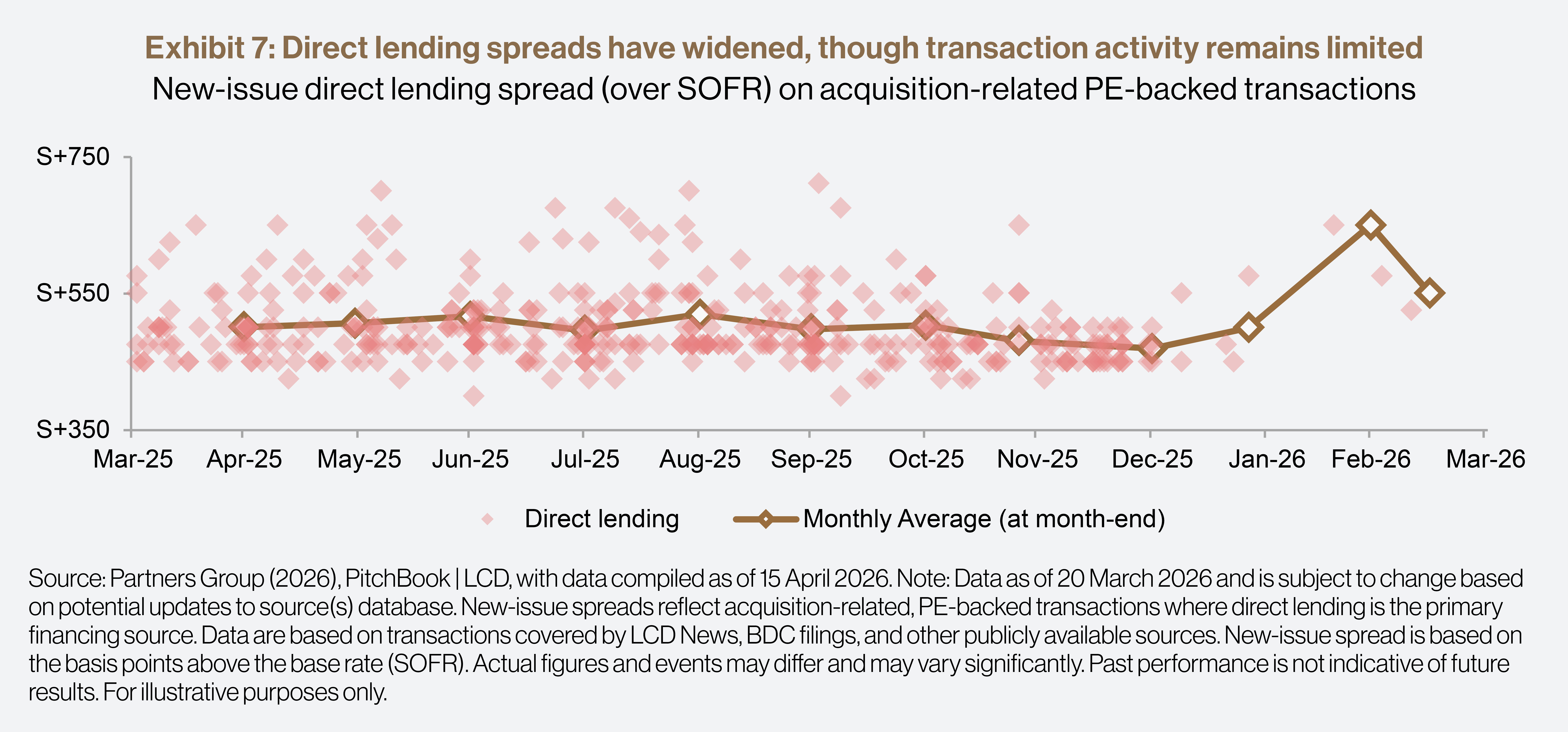
The main risk lies in lender appetite. As maturities approach, weaker borrowers may face higher costs or tighter access to capital. This is likely the primary channel through which defaults could move higher in private credit. Even so, direct lenders remain better positioned than syndicated markets, given their ability to avoid liability management dynamics.
3. Valuations: A Matter of Consistency, Not Fundamentals
Valuation concerns have resurfaced, particularly around the consistency of marks across managers, transparency of methodologies, and stale marks. This has contributed to a perception that private credit portfolios may not fully reflect fair value or underlying risk.
While these concerns are understandable, there are important nuances. Most private credit funds – namely BDCs – rely on third-party valuation firms and a “mark-to-model” framework, where fair value is derived from assumptions around discount rates, borrower fundamentals, sponsor behavior, and recovery expectations, among other inputs.
Importantly, valuation firms assess loans on a periodic basis and assign marks as of a specific date – typically quarter-end or month-end – with results published by managers weeks later. Laws in place explicitly prohibit these firms from valuing assets based on speculative future outcomes or what might happen next. Forward-looking risks can be incorporated only to the extent they are already observable or priced by the market. This means reported marks can quickly become stale in fast-moving environments.
Variation in marks across managers is also driven by several factors, including differences in third-party valuation providers, differences in underlying modeling assumptions, valuation methodologies (range-based vs. point estimate), and the fact that not every loan was originated at the same cost or at the same time. All of these factors can reasonably produce a 5-15 point range in marks across otherwise similar portfolios, particularly for more stressed loans.
That said, we understand the complexities and how this can create the perception of misalignment. However, in our view, this is primarily a transparency and timing issue, not a fundamental credit story. Improved disclosure and more frequent marking should help narrow the gap between perception and reality over time.
4. Redemptions: A Feature, Not a Flaw
Negative headlines have driven a sharp rise in redemption activity, with Q1 2026 requests nearly five times above the prior four-quarter average15. This has been largely sentiment-driven and concentrated in wealth-oriented vehicles (19% of U.S. private credit market16), with pressure amplified by several funds enforcing their pre-stated redemption caps. Institutional capital, by contrast, has remained stable and in some cases increased as market dislocations and wider spreads have created more attractive entry points.
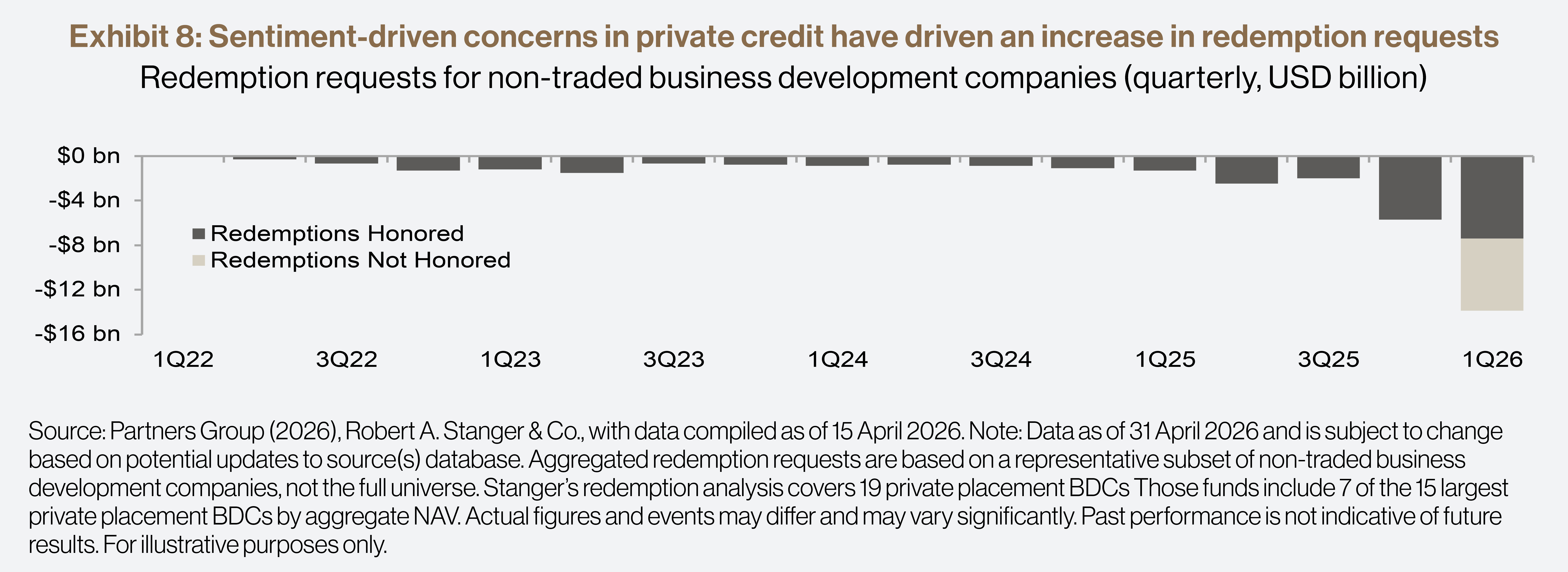
Crucially, redemption caps are a feature, not a flaw. They are designed to align investor liquidity with the long‑term nature of private markets and to avoid forced sales of illiquid assets during periods of volatility or thin market liquidity. What we are seeing today reflects managers acting as fiduciaries, operating within pre-stated limits – not a sign of asset quality problems or liquidity stress.
This is not a blanket “all clear.” Some funds will remain under pressure, but overall liquidity remains meaningful. Most vehicles can meet redemptions at stated limits for at least the next 4-5 quarters, supported by multiple levers, including loan turnover of around 25-30% annually, liquidity sleeves of 10-15% in cash and liquid credit, and access to debt and bank credit lines17.
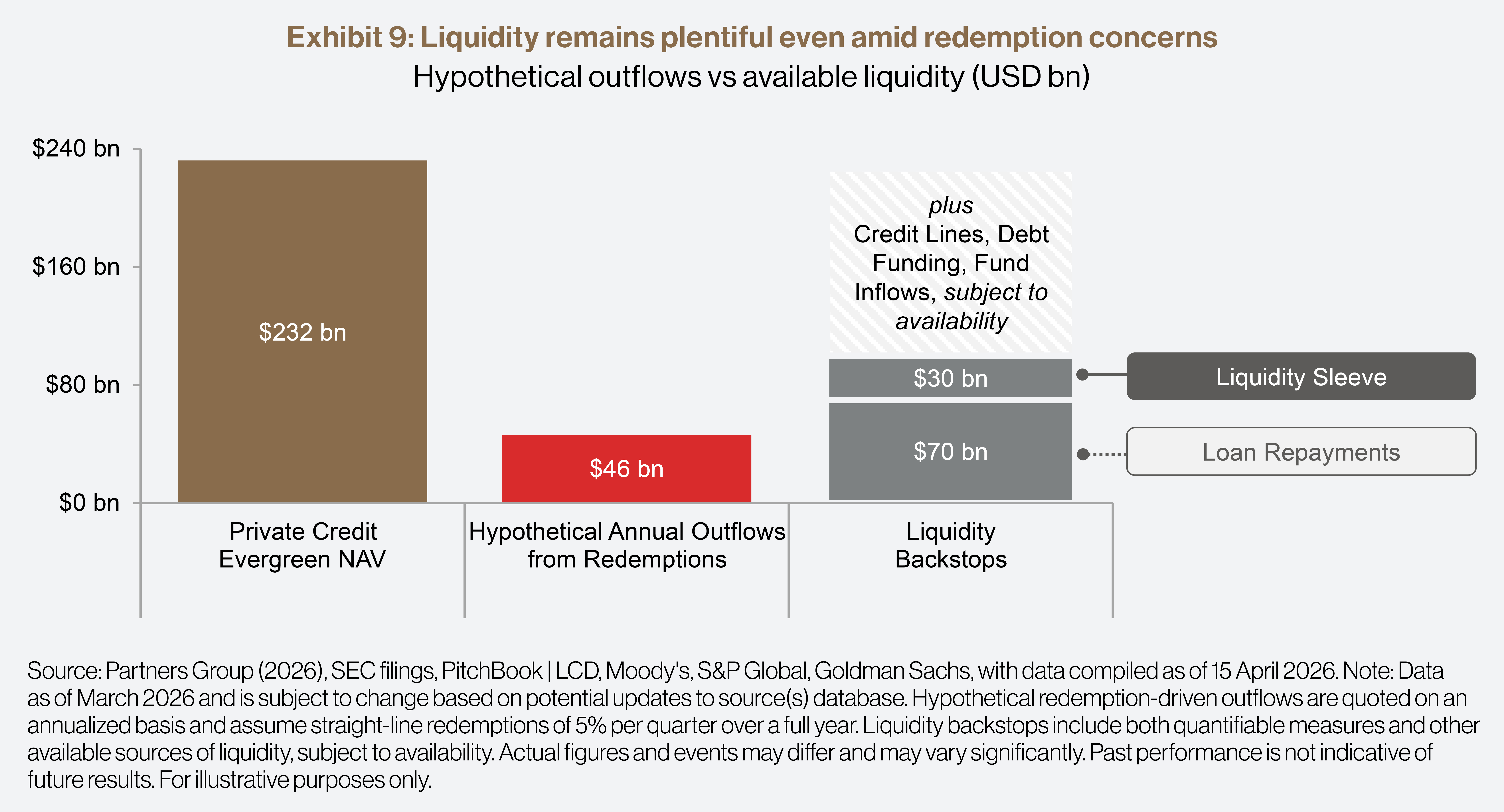
Even if redemptions persist, systemic risk is limited. Bank exposure to private credit is modest – about 4% of large U.S. bank loan books18 versus nearly 40% for mortgages heading into the GFC19 – and conservatively structured at usually 50% advance rates. Losses would require both material collateral declines and weak recoveries. For context, impairing bank lending to private credit would require losses well in excess of GFC levels – which we view as unlikely.
Private credit is entering a new normal. Structural forces – most notably AI-driven disruption – will likely drive greater bifurcation and wider dispersion of returns. As a result, defaults may move higher, recovery rates may compress, and dispersion – across sectors, strategies, and, importantly, managers – may increase. This is not a signal of systemic stress, but a shift in how outcomes are determined.
In modest default environments where outcomes are more certain, returns in private credit have been largely undifferentiated or at least appear to be. However, as technological change drives far more disruption across many business types, outcomes will become more uncertain. A recent survey by PwC found that 45% of global CEOs are concerned that their companies won't survive by the end of the decade20. Default rates could rise and, if technology renders a business obsolete, then recovery rates will likely also fall. This means that credit selection will become much more critical and those who can generate alpha in private credit will materially outperform.
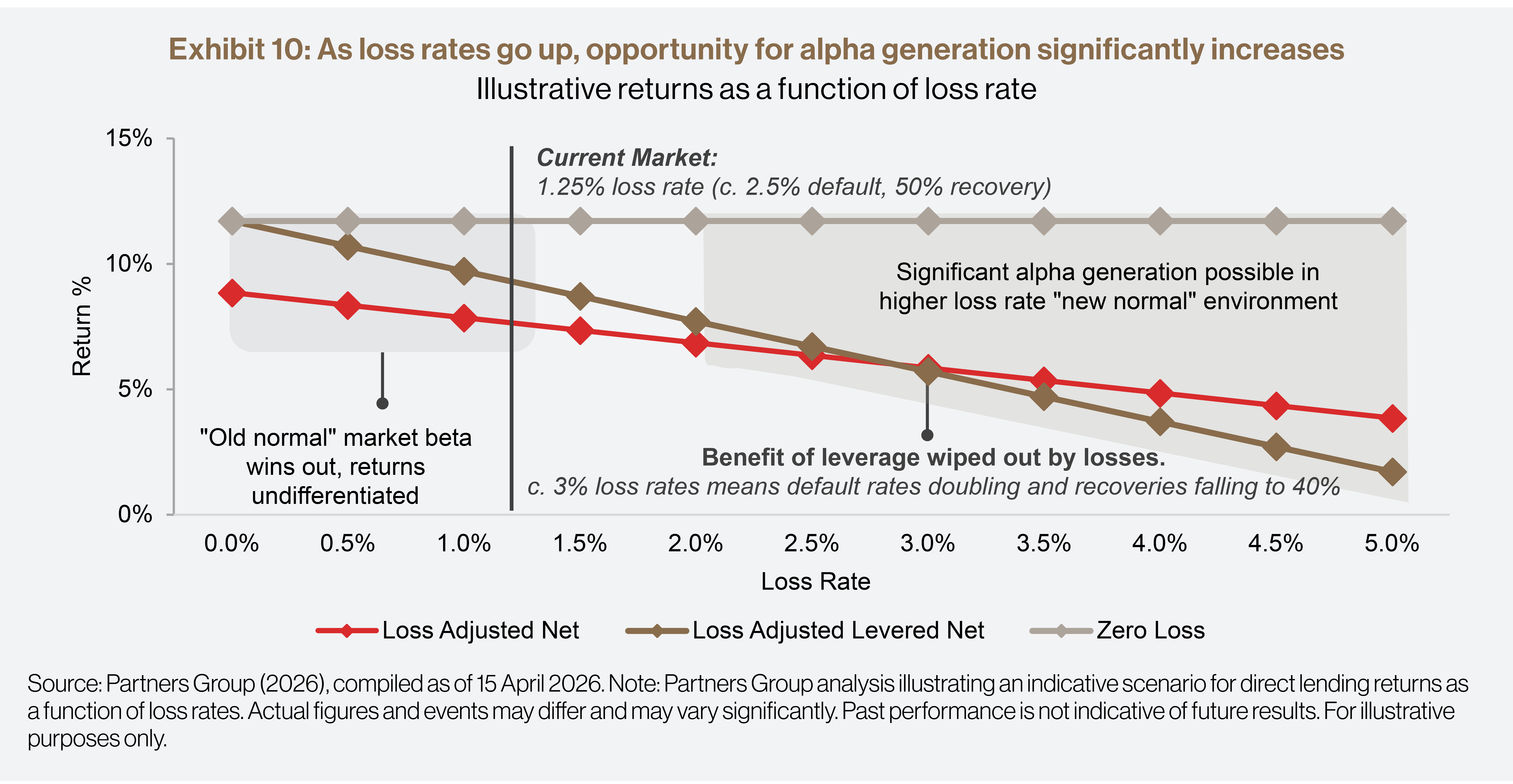
For many, the strategy to drive private credit returns has been levered beta – building highly diversified portfolios of private credit and using portfolio leverage techniques to leverage these portfolios by roughly 1x (so double the asset base). While this approach works well in a normalized market where default and loss rates are relatively benign, it may break down in a period of fundamental business disruption where loss rates (due to both higher default rates and lower recovery rates) are elevated for a sustained period of time.
We illustrate this with a simple chart which shows the impact of rising loss rates on the "levered beta" portfolios. Clearly, as loss rates rise, the "return gap" between the average portfolio and zero loss portfolio increases – this affords greater ability to generate alpha and returns will become more disperse across private credit portfolios. Indeed, at a certain loss rate, the benefit of leverage is more than wiped out in said average portfolio.
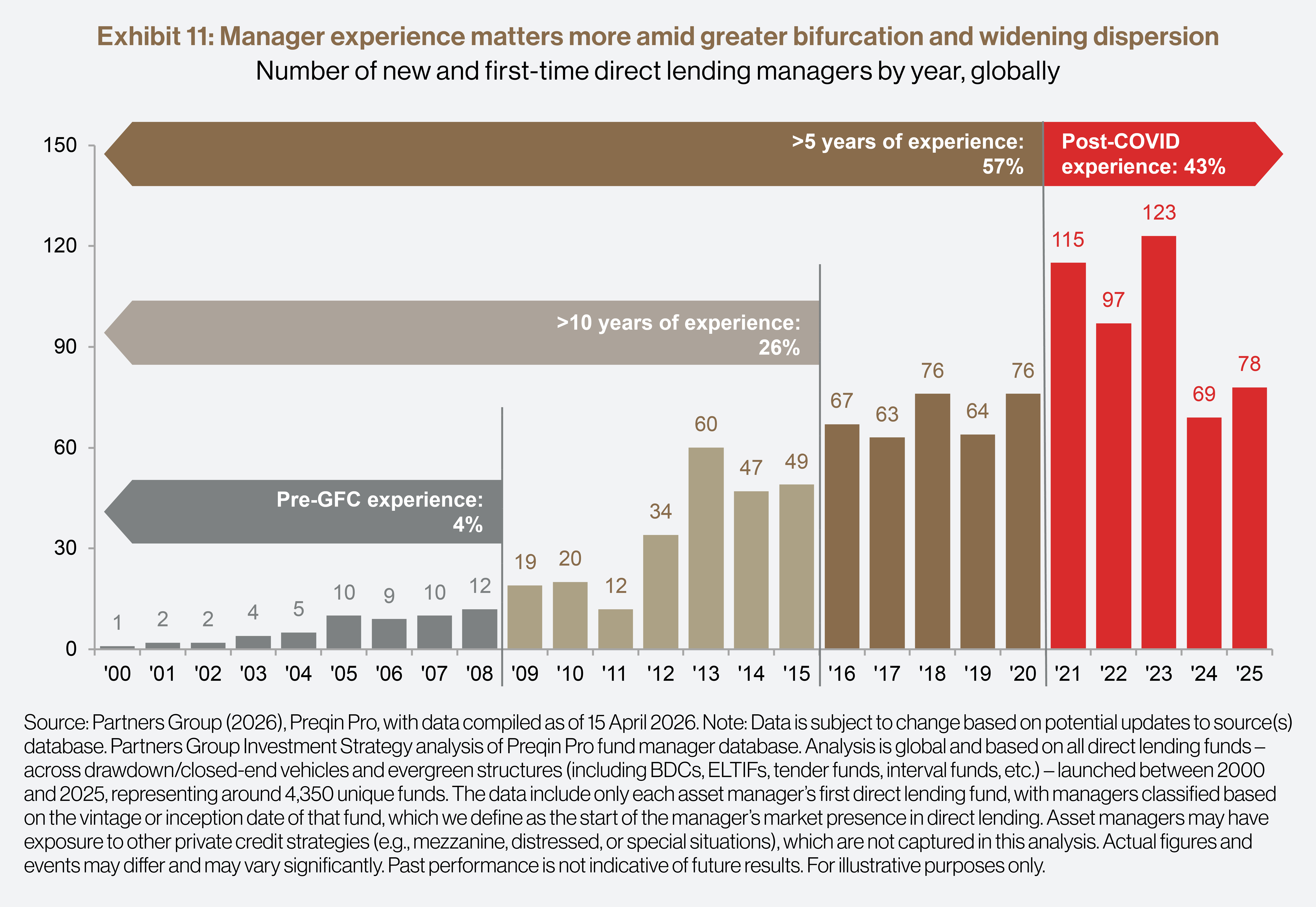
This shift reinforces what has always mattered in private markets: underwriting discipline, manager experience, and the ability to actively manage assets through cycles. This distinction is more important than ever. With nearly half of direct lending managers formed post-COVID and close to 70% established within the past decade21, many have yet to be tested through a full cycle – suggesting differentiation across managers is likely to increase further.
At the same time, this shift is creating opportunities. Wider spreads and increased selectivity are creating a more attractive entry point for lenders with newer vintages and fresh capital to deploy. Periods like this – where narrative diverges from fundamentals – have historically been the environments in which alpha is generated.
At Partners Group, this has been our view for some time. We have long approached private credit with an owner's mindset and apply a private equity style approach to our underwriting process. In a market where manager selection matters more than ever, this approach is precisely suited for the environment ahead.

Andrew Bellis
Partner, Head of Private Credit

Anastasia Amoroso
Managing Director and Chief Investment Strategist

Fiona Gillespie
Senior Macro Strategist

Nicholas Weaver
Vice President, Investment Strategist

Qian Ren
Associate, Investment Strategy
Note:
Preqin data is typically compiled from funds that elect to self-report. Thus, this data may not be representative of all funds, and may be biased toward those funds that generally have higher performance. Additionally, the funds included in these measures may lack commonality. Over time, components of the data may change. Funds may begin or cease to be represented based on these factors, thereby creating a 'survivorship bias' that may additionally impact the data reported.
Important Disclosure Information:
This presentation is for educational and discussion purposes only and should not be treated as research. This presentation may not be distributed, transmitted or otherwise communicated to others, in whole or in part, without the express written consent of Partners Group (together with its subsidiaries, "Partners Group"). The views and opinions expressed in this presentation are the views and opinions of the authors of the content. They do not necessarily reflect the views and opinions of Partners Group and are subject to change at any time without notice. Further, Partners Group and its affiliates may have positions (long or short) or engage in securities transactions that are not consistent with the information and views expressed in this presentation. There can be no assurance that an investment strategy will be successful. Historic market trends are not reliable indicators of actual future market behavior or future performance of any particular investment which may differ complete, not be relied upon as such.
This presentation does not constitute an offer of any service or product of Partners Group. It is not an invitation by or on behalf of Partners Group to any person to buy or sell any security or to adopt any investment strategy, and shall not form the basis of, nor may it accompany nor form part of, any right or contract to buy or sell any security or to adopt any investment strategy. Nothing herein should be taken as investment advice or a recommendation to enter into any transaction. Hyperlinks to third-party websites in this presentation are provided for reader convenience only. Unless otherwise noted, information included herein is presented as of the dates indicated. This is not complete, and the information contained herein may change at any time without notice. Partners Group does not have any responsibility to update the presentation to account for such changes.
Partners Group has not made any representation or warranty, expressed or implied, with respect to fairness, correctness, accuracy, reasonableness, or completeness of any of the information contained herein (including but not limited to information obtained from third parties unrelated to Partners Group), and expressly disclaims any responsibility or liability, therefore. The information contained herein is not intended to provide, and should not be relied upon for, accounting, legal or tax advice or investment recommendations. Investors should make an independent investigation of the information contained herein, including consulting their tax, legal, accounting or other advisors about such information. Partners Group does not act for you and is not responsible for providing you with the protections afforded to its clients.
Certain information contained herein may be "forward looking" in nature. Due to various risks and uncertainties, actual events or results may differ materially from those reflected or contemplated in such forward- looking information. As such, undue reliance should not be placed on such information. Forward-looking statements may be identified by the use of terminology including, but not limited to, "may", "will", "should", "expect", "anticipate", "target", "project", "estimate", "intend", "continue" or "believe" or the negatives thereof or other variations thereon or comparable terminology.
Index performance and yield data are shown for illustrative purposes only and have limitations when used for comparison or for other purposes due to, among other matters, volatility, credit or other factors (such as number of investments, recycling or reinvestment of distributions, and types of assets). It may not be possible to directly invest in one or more of these indices and the holdings of any strategy may differ markedly from the holdings of any such index in terms of levels of diversification, types of securities or assets represented and other significant factors. Indices are unmanaged, do not charge any fees or expenses, assume reinvestment of income and do not employ special investment techniques such as leveraging or short selling. No such index is indicative of the future results of any strategy or fund. Additional information may be available upon request. Past performance is not indicative of future results.
Investing in private markets involves risk; principal loss is possible. Certain significant risks include, but are not limited to: lack of operating history; economic, political and legal risks; currency risk; leverage risk of borrowing by a fund; auditing and financial reporting; possible lack of diversification; control issues; financial market fluctuations; illiquid investments; mezzanine investments; real estate; hedging risk.