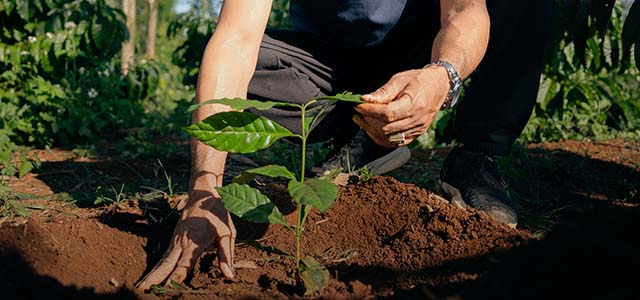
According to the latest Nescafé Plan 2030 Progress Report released today, Nescafé sourced 53% of its green coffee from farmers adopting regenerative agriculture practices in 2025. The increase was driven by a higher volume of green coffee received from those farmers and the expansion of Nescafé's field programs. In 2025, more than 1 600 Nescafé agronomists and field staff supported farmers in 15 countries through training and technical support on regenerative agriculture. Nescafé also adapted its procurement approach to source more coffee from farmer units adopting these regenerative practices..
The Nescafé Plan 2030 prioritizes regenerative agriculture to enhance farming practices and coffee supply resilience, benefiting farmers and farmland ecosystems. Practices such as agroforestry, cover crops and optimized fertilization can help improve soil health and support long-term yields. Intercropping can also create new revenue streams for farmers and help diversify their income. In 2025, Nescafé reported an 18.3% reduction in greenhouse gas (GHG) emissions from its green coffee compared with its 2018 baseline.
"With more than half of our green coffee sourced from farmers adopting regenerative agriculture practices in 2025, Nescafé has reached a major milestone," said Antje Shaw, Head of Sustainability for Nescafé. "This shows how we are working with farmers to scale regenerative agriculture across our coffee supply chain. We aim to support farmers in this transition, strengthen resilience to climate change and help secure Nestlé's long-term access to coffee, a key growth driver for the company." |