
Barry Callebaut Group Full-Year Results, Fiscal Year 2025/26 Mittwoch, 04. November 2026 - 07:01
- In FY 2025/26 Group volume decreased slightly by -0.7%, with a second consecutive quarter of growth in Q4 (+5.7%), well ahead of the declining chocolate confectionery market (-4.3%)1
- Sales revenue declined by -15.2% in constant currency to CHF 12.2 billion (-17.6% in CHF), reflecting lower year-on-year cocoa bean-linked sales prices
- Operating profit (EBIT) recurring2 decreased by -14.1% in constant currency to CHF 604.5 million (-15.6% to CHF 594.0 million in CHF), reflecting the negative impact of temporary Gourmet long positions and lower finance cost pass-through in a declining bean price environment
- Strong reduction in net finance costs enabled the Group to recover around two-thirds of the absolute EBIT recurring2 decrease at the Profit before tax recurring2 level
- Very significant free cash flow generation of CHF 2,009.8 million reduced net debt by -42.5% and leverage to 2.9x Net debt/EBITDA recurring2, supported by structural actions to enhance the Group's resilience to cocoa bean price volatility
- Proposed dividend of CHF 29.00, in line with prior year
- Building momentum through Focus for Growth: Q4 saw +13.6% volume growth in Gourmet as customers responded to new pricing and priority markets grew +7.0% in H2. Advancing targeted investments and organizational effectiveness to drive FY 2026/27 performance
- FY 2026/27 outlook, assuming GBP 4,000 cocoa bean price:
- 1-3% volume growth, including selective contract prioritization to focus on profitable, value-added growth opportunities in key markets and segments
- Profit before tax recurring3 expected to increase by around 30%, with 3-5% EBIT recurring3 growth. Driving operational leverage through increased organizational effectiveness and productivity initiatives
- Net debt/EBITDA recurring expected to remain at or below 2.9x

1Source: Nielsen volume growth excluding e-commerce – 25 countries, September 2025 - August 2026. Data subject to adjustment to match Barry Callebaut's reporting period. Nielsen data only partially reflects the out-of-home and impulse consumption.
2Refer to appendix on page 10 (of the PDF) for the detailed recurring results reconciliation.
3In constant currency. Note the term "in constant currency" replaces "in local currencies" from this report onwards. The methodology is unchanged.
4 Refer to appendix on page 10 (of the PDF) for the detailed recurring results reconciliation.
Barry Callebaut Group delivered sales volume of 2,109,866 tonnes in fiscal year 2025/26, a decrease of -0.7% compared to the prior fiscal year. Sales volume increased by +5.7% in the fourth quarter, supported by strong growth in most regions, particularly Western Europe.
Global Chocolate saw a -0.5% volume decrease in fiscal year 2025/26, in a declining chocolate confectionery market according to Nielsen (-4.3%)5. Volume for Food Manufacturers decreased slightly (-0.7%) as a challenging market environment and temporary in-house production shifts for Global Accounts (-2.9%) were partly offset by better momentum for Regional Food Manufacturers. Gourmet volumes increased by +0.8%, driven by double-digit growth in the fourth quarter as the business entered its new pricing cycle.
Looking at regional performance within Global Chocolate, Asia Pacific, Middle East and Africa (AMEA) was the strongest contributor. The region saw +9.8% volume growth led by continued momentum in India, market share gains in China and customer wins in Australia. Volume in Central and Eastern Europe (CEE) increased by +1.1% as strong growth for Gourmet and regional Food Manufacturers offset a challenging environment for large Global Accounts. Western Europe saw slightly positive volume growth (+0.2%), ahead of a declining market. Growth was supported by strong fourth quarter momentum in Gourmet as well as Food Manufacturer contracts previously entered into during a period of heightened industry overcapacity. Latin America delivered volume growth of +1.2% reflecting a strong fourth quarter, particularly for Gourmet. North America reported a volume decrease of -6.1%, as a result of network supply disruption in the first half of the year, with an improved second half despite challenging market demand dynamics (-5.8%)5.
Global Cocoa saw a -1.8% decrease in sales volume, impacted by lower market demand in the first half of the year. Growth turned strongly positive in the second half (+12.2%) as a result of a low base of comparison and elevated demand following the cocoa market correction earlier in the year, particularly for cocoa powder, which saw some customer restocking.
Sales revenue decreased by -15.2% in constant currency (-17.6% in CHF) to CHF 12,189.6 million, reflecting lower cocoa bean-linked sales prices.
Gross profit amounted to CHF 1,341.3 million, down -2.9% in constant currency (-5.5% in CHF), partly as a result of lower year-on-year finance cost pass-through.
Operating profit (EBIT) recurring6 decreased by -14.1% in constant currency to CHF 604.5 million (-15.6% in CHF to CHF 594.0 million). Cocoa profitability was strong as the business captured a more favorable margin environment. This was more than offset by the negative impact of a temporary Gourmet long position in a declining cocoa bean price environment, supply disruption costs and a lower year-on-year pass-through of financing costs. While these factors weighed on EBIT, the financing cost impact was neutral at the Profit before tax level and the temporary Gourmet position was resolved by late summer. The Group's fixed cost base remained relatively stable during the year. EBIT recurring6 per tonne amounted to CHF 282, down -13.4% in constant currency (-14.9% in CHF).
EBIT recurring6 for Global Chocolate was CHF 543.3 million, down -25.2% in constant currency (-26.1% in CHF), due to the long Gourmet position in a declining market environment and supply disruption. EBIT recurring6 for Global Cocoa was CHF 168.2 million, up +92.1% in constant currency (+78.1% in CHF). The strong increase was supported by a more favorable margin environment, which started to normalize in the second half of the year. Corporate and other saw EBIT recurring6 of CHF -117.5 million, broadly similar year-on-year (-0.6% in constant currency, +7.2% in CHF).
Profit before income tax recurring6 amounted to CHF 286.8 million, a decrease of -12.1% in constant currency (-12.1% in CHF). Net finance costs decreased significantly to CHF -311.9 million, compared to CHF -376.9 million in the prior year, mostly as a result of debt reduction. During the year, the Group repaid a EUR 263 million term loan in September 2025, a EUR 191 million Schuldscheindarlehen in February 2026 and a CHF 240 million Swiss bond in May 2026, while reducing its outstanding commercial paper and bilateral facilities. In June, Barry Callebaut also completed a bond buyback tender on the Group’s outstanding Senior Guaranteed Euro-denominated Notes issued by Barry Callebaut Services N.V., with a final acceptance amount of EUR 849 million. The strong reduction in net finance costs enabled the Group to recover around two-thirds of the decrease in absolute EBIT recurring6 (CHF 109.4 million lower year-on-year) at the Profit before tax recurring6 level (CHF 39.7 million lower year-on-year).
Net profit recurring6 amounted to CHF 215.5 million, down -13.0% in constant currency (-13.7% in CHF). On a recurring6 basis, income tax expense decreased to CHF 71.3 million from CHF 76.9 million in the prior year. This corresponds to an effective tax rate of 24.9% (prior year: 23.6%). The slight increase in the effective tax rate on a recurring basis mainly resulted from a somewhat less favorable mix of profit before taxes, partly compensated by a positive impact from recognition of tax losses carried forward. Net profit reported amounted to CHF 157.7 million, down -16.4% in constant currency versus CHF 188.4 million in the prior year period.
Net working capital decreased to CHF 2,326.8 million, compared to CHF 3,997.8 million in the prior year. The reduction was driven by the positive impact from lower cocoa bean prices on inventory value and structural actions to reduce the working capital cycle. Actions include diversifying sourcing, leveraging bean blending capabilities, enhancing demand and inventory planning, and greater financing agility through the implementation of the Letter of Credit and Borrowing Base Facility.
Free cash flow increased significantly to CHF 2,009.8 million, compared to CHF -312.0 million in the prior year. The increase was supported by lower cocoa bean prices and structural actions to reduce the cash cycle, optimize sourcing and enhance the Group's resilience to cocoa bean price volatility.
As a result, Net debt decreased to CHF 2,474.2 million from CHF 4,301.3 million in the prior-year period and enabled important progress on leverage. Net debt / EBITDA recurring6 was 2.9x compared to 4.5x in August 2025. When taking into consideration the cocoa bean inventories as readily marketable inventories (RMI), adjusted Net debt / EBITDA recurring6 was 1.5x.
5 Source: Nielsen volume growth excluding e-commerce – 25 countries, September 2025 - August 2026. Data subject to adjustment to match Barry Callebaut's reporting period. Nielsen data only partially reflects the out-of-home and impulse consumption.
6 Refer to appendix on page 10 (of the PDF) for the detailed recurring results reconciliation.
In June 2026, Barry Callebaut launched Focus for Growth, an action plan to strengthen the Group’s fundamentals and sharpen its leadership position as a value-added, end-to-end cocoa and chocolate solutions provider. Since then, the Group has taken action to accelerate its select growth priorities and key enablers. Importantly, FY 2025/26 already demonstrated early progress, with the Group’s 10 priority markets delivering +7.0% volume growth in the second half of the year, zero critical incidents from a food safety perspective and significant improvements in customer satisfaction in its two largest regions (+8% points in Western Europe, +9% points in North America). Barry Callebaut has also taken important recent actions to support the delivery of its commitments into FY 2026/27:
- Driving innovation in value-added solutions: During the inaugural Callebaut Innovation Summit, Barry Callebaut unveiled Flavourcode™, a proprietary approach to cocoa fermentation, designed to create distinctive natural flavor profiles and reproduce them consistently, from artisan kitchens to future food-manufacturing applications. The first commercial expression of the platform is Callebaut Flavourcode™ 01, developed for chocolatiers, chefs and artisans. Its consistent sensory profile gives chefs and artisans a reliable foundation on which to create, helping them reproduce an intended taste experience time after time. It has been developed for applications including pastry, confectionery, ice cream and plated desserts.
- Advancing targeted investments and reducing complexity to create a more flexible and efficient manufacturing network: As part of its Focus for Growth action plan, Barry Callebaut continues to sharpen its manufacturing footprint through a combination of targeted growth investments and network optimization. The Board of Directors has approved an expansion project at the Group's state-of-the-art Brantford facility in Canada to increase cacao coatings capacity and further strengthen customer service in North America. In addition, the Board has approved a new greenfield site in Karawang, Indonesia, one of the Group's priority emerging markets, to support future growth and expand local manufacturing capacity. At the same time, Barry Callebaut is simplifying its manufacturing network by consolidating production into larger, more efficient sites, including the proposed closure of the Hendersonville facility in the U.S. and the beverages manufacturing site in Chester, United Kingdom, during the second quarter of 2027. These actions will support improved asset utilization, greater operational flexibility and a more efficient cost base.
- Enhancing operating leverage through greater organizational effectiveness: Following the implementation of its new organizational structure on September 1, 2026, Barry Callebaut is reviewing how the organization can operate more effectively and efficiently to accelerate execution of its Focus for Growth plan. The Group is identifying opportunities to simplify structures, streamline ways of working and ensure resources are aligned with strategic priorities, with the objective of changing the cost curve and driving productivity over time. Together, these actions are expected to improve future operating leverage, creating a more scalable cost base and supporting the Group's objective of delivering profit growth ahead of volume growth.
Barry Callebaut and Hershey began their commercial partnership in 2007 under a long-term agreement with an initial term of 15 years, subsequently extended to the end of calendar year 2027. Over nearly two decades, the partnership has supported the growth of both companies in North America.
As strategic priorities have evolved, the current partnership agreement will expire at the end of its term, and Barry Callebaut and Hershey are working together to finalize the future scope of their commercial relationship.
Barry Callebaut expects an impact of approximately -1% on Group sales volume in FY 2026/27, reflecting the transition of certain volumes ahead of the agreement's expiry. Any further volume impact will depend on the outcome of the ongoing discussions between the parties. Hershey represented approximately 4% of the Group's sales volume in FY 2025/26.
Consistent with the Group's strategic focus on value creation and profitable growth, the impact on profitability is expected to be neutral in FY 2026/27 and beyond. Going forward, Barry Callebaut will have greater strategic flexibility to focus its resources on differentiated, profitable growth opportunities, supporting the continued execution of its Focus for Growth action plan.
The Group's FY 2026/27 guidance already incorporates the expected impact of the transition.
Barry Callebaut and Mondelēz International sign long-term strategic Future Farming Initiative agreementBarry Callebaut has signed an industry-first, long-term strategic agreement under its Future Farming Initiative (FFI) with Mondelēz International, bringing together two industry leaders in the chocolate and cocoa value chain to advance new approaches to increase long-term cocoa supply resilience. The agreement establishes an operating model and capabilities to scale high-tech cocoa farming, commencing in Brazil, spanning 15 years.
The partnership is designed to drive greater productivity per hectare and support geographic diversification, while introducing a pricing model designed to support a more predictable, stable and diversified cocoa supply. For both Barry Callebaut and Mondelēz International, it represents a long-term commitment to strengthening cocoa supply resilience, and complements both companies’ continued work across cocoa-growing communities, supporting farmer livelihoods and respecting human rights.
The partnership also demonstrates Barry Callebaut’s scale and capabilities from origin to chocolate, including its work on traceability and deforestation-free sourcing, while addressing growing customer demand for deeper, long-term collaboration, and establishes a scalable model for future partnerships over time.
In fiscal year 2026/27, Barry Callebaut expects to deliver volume growth between 1% and 3%, reiterating its prior commitment and reflecting increased focus and competitiveness in faster growing segments in an overall challenging chocolate confectionery market, particularly in Western Europe and North America. Volume growth is expected to be weighted to the first half of the fiscal year, with a higher base of comparison in the second half and selective contract prioritization to focus on profitable, value-added growth opportunities in key markets and segments. This includes the expected impact from the Hershey transition and the phasing out of low profitability Food Manufacturer contracts in Western Europe. Profit before tax recurring is expected to increase by around 30% in constant currency, with EBIT recurring growth in constant currency between 3% and 5%. Increased organizational effectiveness and productivity initiatives are expected to drive operational leverage. Non-recurring operating expenses are expected to be around CHF 25 million, primarily associated with identified initiatives to simplify the manufacturing network and accelerate productivity and organizational effectiveness. As the Group continues its deleverage agenda, the delayed impact of higher cocoa bean prices from the second half of fiscal year 2025/26 on working capital is expected to be offset by continued operational actions to reduce the cash cycle. As a result, Net debt/EBITDA recurring is expected to remain at or below 2.9x, with free cash flow between CHF 200 million and CHF 300 million. The Group’s outlook assumes a cocoa bean price of GBP 4,000.
The Board of Directors is proposing to shareholders at the virtual Annual General Meeting of Shareholders (AGM) on December 9, 2026, a payout of CHF 29.00 per share. This is consistent with the company's Focus for Growth action plan for a stable or increasing dividend and a targeted dividend payout ratio above 35% of recurring net profit. The dividend will be paid to shareholders on, or around, January 13, 2027, subject to approval by the Annual General Meeting of Shareholders.
Board of DirectorsFernando Aguirre, Board member since 2013, and Daniela Bosshardt, Board member since 2025, will not be standing for re-election at the Annual General Meeting of Shareholders on December 9, 2026. The Board of Directors would like to express its sincere gratitude to Fernando Aguirre and Daniela Bosshardt for their valuable contributions to the Board.
All other members of the Board will stand for re-election for another term of office of one year.
The Board of Directors proposes to elect Debra Crew, American national, as a new member of the Board. Debra Crew is an experienced board director and global business leader with more than 30 years of leadership experience in consumer goods. Most recently, she served as Chief Executive Officer of Diageo plc, having previously held the roles of Chief Operating Officer and President, North America. Prior to Diageo, she served as President and Chief Executive Officer of Reynolds American and held senior leadership positions at PepsiCo, Mars, Nestlé Dreyer’s Grand Ice Cream, and Kraft Foods. She currently serves as Independent Chairman of Stanley Black & Decker and brings extensive expertise in global consumer markets, business transformation, operations, governance and value creation.
| Date: | Wednesday, November 4, 2026, from 09:00am CET |
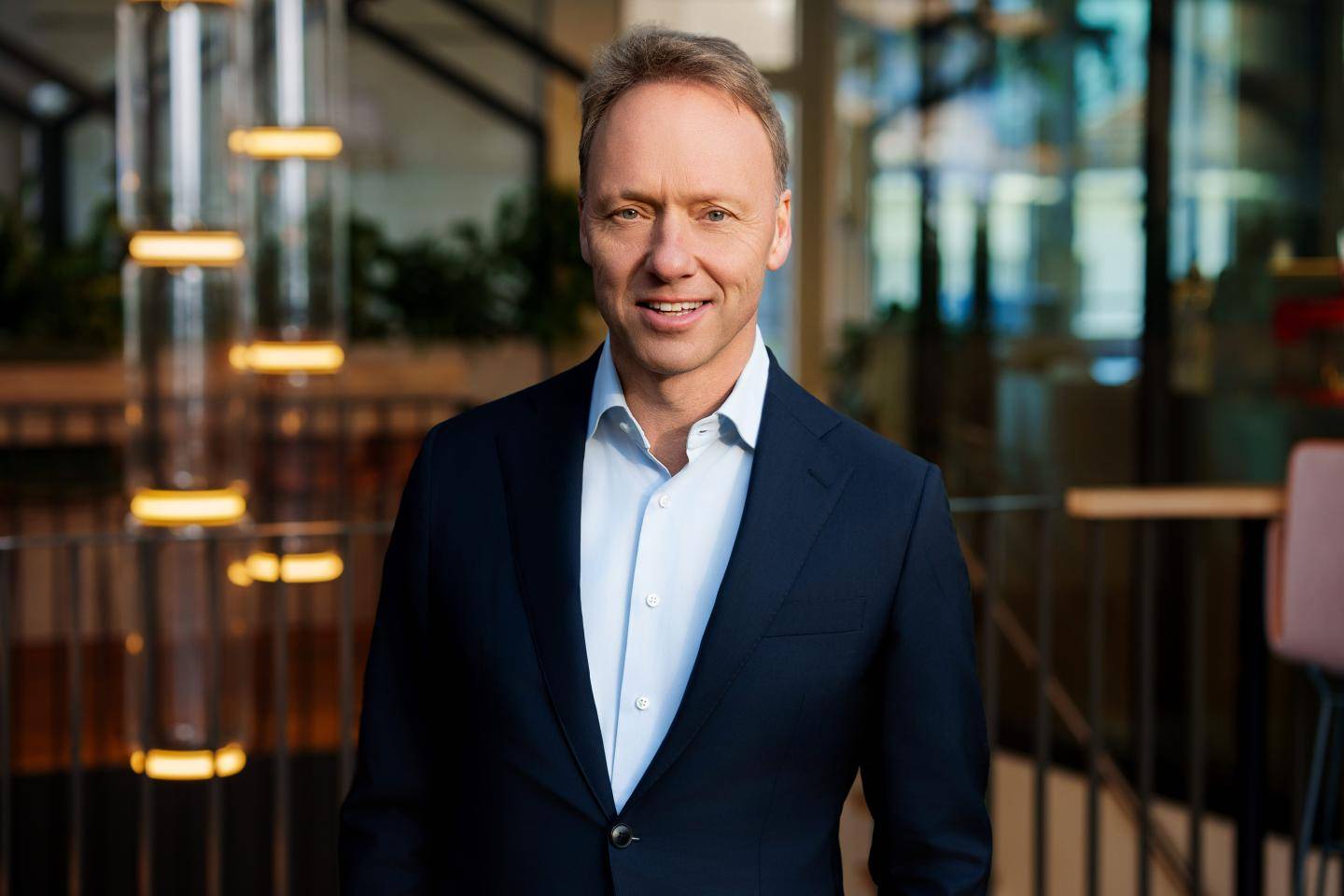
This will be a virtual presentation for analysts and investors, hosted by Hein Schumacher, CEO and and Peter Vanneste, CFO, which can also be followed via telephone or webcast. Dial-in and access details can be found here.
Financial Calendar for Fiscal Year 2026/27(September 1, 2026 to August 31, 2027)
| Annual General Meeting 2025/26 | December 9, 2026 |
| 3-Month Key Sales Figures 2026/27 | January 20, 2027 |
| Half-Year Results 2026/27 | April 15, 2027 |
| 9-Month Key Sales Figures 2026/27 | July 8, 2027 |
| Full-Year Results 2026/27 | November 3, 2027 |
| Annual General Meeting 2026/27 | December 8, 2027 |
- Press Release English
- Annual Report Fiscal Year 2025-26
- Analyst Presentation
- Annual Social and Environmental Impact Report 2025-26
- Report on non-financial matters according to Swiss Code 2025-26
- Regional Statements Fiscal Year 2025-26


7 Prior-year figures for sales volume and sales revenue are restated, please refer to Note 1 of the Annual Report 2025/26.
8 Refer to appendix on page 10 for the detailed recurring results reconciliation.
9 FY 2025/26 sales revenue of CHF 0.6 million related to the Future Farming Initiative is included within the "Corporate and other" segment and the "Cocoa Products" product group.


10 Non-IFRS measures are defined under the Alternative Performance Measures in the Annual Report 2025/26 on page 140.
11 Refer to appendix on page 10 for the detailed recurring results reconciliation.
12 From fiscal year 2024/25, Net debt represents the amount as at August 31, instead of an average.
The reconciliation of non-recurring items of fiscal year 2025/26 and their impact on the Group's Key Alternative Performance Measures (APMs) can be found in the table below. Non-recurring items of the prior year can be found in the Annual Report 2024/25.

During the fiscal year 2025/26, terminal market14 prices for cocoa beans declined as a sizable second consecutive cocoa surplus materialized. On average, cocoa bean prices decreased by -44% versus the prior-year period and closed the period at GBP 4,859. The period saw improvements in West African arrivals, as well as year-on-year growth in production from Latin American origins such as Ecuador and Brazil. Cocoa grindings began to stabilize as the year progressed and continued to recover from their low point in the second quarter of the prior calendar year. These factors helped to bring a continued recovery in global stocks of cocoa beans, as strong origin exports continue to make their way to destination warehouses.
Global sugar prices averaged -14% lower than the same period last year, as improving supply across major producing regions outpaced steady demand, leading to a global sugar surplus in the 2025/26 crop cycle. In Europe, prices also fell by -14% despite reduced sugar beet plantings in the 2025/26 campaign, reflecting higher than expected yields, a weaker global sugar price environment, and rising stocks as European production and imports continued to exceed demand.
Dairy prices remained broadly stable compared to the previous year. Milk supply growth remained robust, keeping global markets well supplied. Hot summer weather supported prices globally, with the dairy protein market continuing to be driven by stronger demand than supply. However, elevated fat inventories continued to cap further price gains.
13 BC Next Level cost mainly include CHF -20.9 million reported as "Other expense" and CHF 20.2 million reported as "Other income" (refer to Note 1.3 - "Other income and expense"), CHF -53.2 million reported as "General and administration expenses" and CHF0.9 million reported as "Cost of goods sold".
14 Source: London terminal market prices for 2nd position, September 2025 to August 2026. Terminal market prices exclude Living Income Differential (LID) and country differentials.
About Barry Callebaut Group:
With annual sales of about CHF 12.2 billion in fiscal year 2025/26, the Zurich-based Barry Callebaut Group is the world's leading manufacturer of high-quality chocolate and cocoa solutions. The Group provides chocolate experiences across the full spectrum of chocolate, cocoa, cacao coatings and non-cocoa alternatives, from sourcing and processing cocoa beans to crafting premium chocolates, fillings and decorations.
Barry Callebaut operates 58 production facilities worldwide and employs a diverse, committed workforce of over 13,000 people. The Group serves the entire food industry, from industrial food manufacturers to artisanal and professional users such as chocolatiers, pastry chefs, bakers, hotels, restaurants and caterers, with Callebaut® and Cacao Barry® as it’s leading global brands. Through its uniquely integrated cocoa-to-chocolate model, Barry Callebaut helps customers deliver differentiated products and solutions across a wide range of market segments.
Barry Callebaut is committed to making sustainable chocolate the norm, helping to secure the future supply of cocoa and improve farmer livelihoods. The Group supports the Cocoa Horizons Foundation, which aims to drive positive impact for cocoa farmers and their communities and help build a sustainable future for cocoa and chocolate.


Barry Callebaut AG (Head Office)
Hardturmstrasse 181
8005 Zurich
Switzerland